Philosophy of Inquiry
1. Introduction
The Socratic Method is a form of cooperative, question-driven dialogue developed by Socrates in ancient Athens during the 5th century BCE. Rather than lecturing or asserting conclusions outright, Socrates pursued truth by asking a chain of probing questions — a technique later given the Greek name elenchus (roughly, "cross-examination" or "refutation"). The goal was rarely to win an argument; it was to expose hidden contradictions in a person's beliefs and push both participants toward a clearer, more defensible understanding of concepts like justice, courage, and virtue.
2. Historical Background
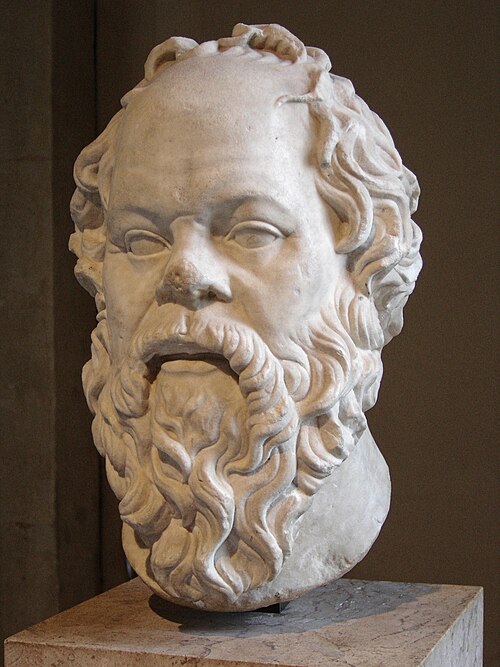
- Socrates (c. 470–399 BCE): Athenian philosopher, widely regarded as a founding figure of Western philosophy, though he left no writings of his own.
- He practiced this style of dialogue openly in the Agora — the public marketplace of Athens — questioning politicians, poets, generals, and craftsmen alike about the concepts they claimed to understand.
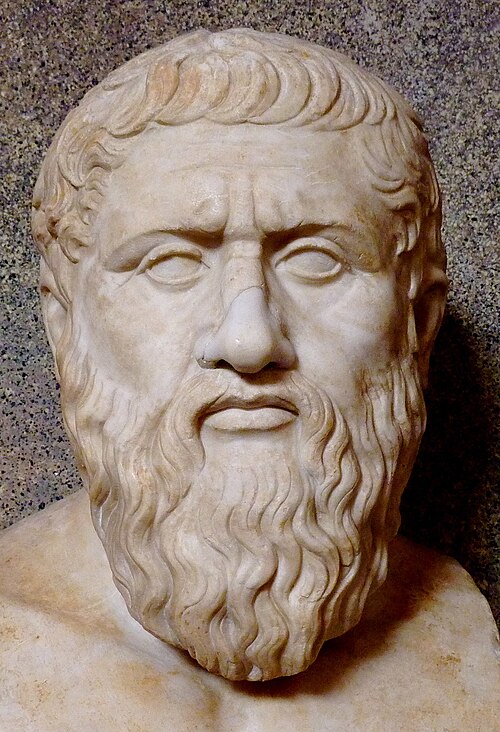
- Everything we know of his method comes secondhand, chiefly through the dialogues of his student Plato (such as Euthyphro, Meno, and The Republic) and the memoirs of his other student Xenophon.
- Socrates' relentless questioning of Athens' civic and religious assumptions contributed to the charges of "corrupting the youth" and "impiety" that led to his trial and execution in 399 BCE.
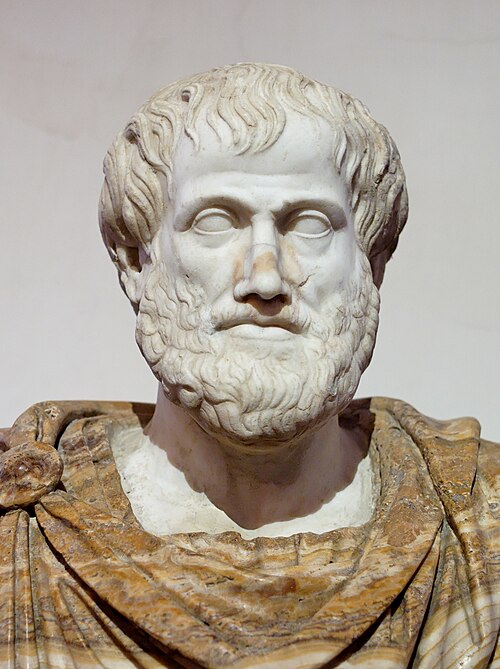
- His student Plato in turn taught Aristotle, who systematized dialectical reasoning further at his own school, the Lyceum — carrying the method forward into the broader Western philosophical tradition.
3. Core Principles
- Questioning Assumptions – rather than accepting a definition at face value, the Socratic method treats every claim as a hypothesis to be tested.
- Dialectic Process – understanding is built through a back-and-forth exchange between two or more participants, not delivered as a one-way lecture.
- Acknowledging Ignorance – Socrates famously professed to know nothing, treating admitted ignorance not as weakness but as the necessary starting point for genuine inquiry.
- Pursuit of Truth Over Victory – the aim is to refine one's own understanding through reasoned debate, not to score rhetorical points against an opponent.
 Illustration: a question, and an answer that leads to the next question
4. The Elenchus: How the Method Actually Works
Stripped down, a typical Socratic exchange follows a recognizable pattern, repeated as many times as needed:
- Claim. A participant offers a definition or belief — for example, that courage is simply "not running away in battle."
- Clarifying questions. Socrates asks what the claim actually means and where its boundaries lie.
- Counter-example. Socrates (or the dialogue itself) surfaces a case the definition fails to cover — a soldier who wisely retreats to fight another day, for instance, or a reckless act that isn't truly courageous at all.
- Contradiction exposed (aporia). The original claim is shown to be incomplete or inconsistent, and the participant is left in a state of productive puzzlement rather than false confidence.
- Refinement. A revised, more careful definition is proposed, and the cycle begins again — each round narrowing in on a sturdier understanding, even if a final, complete definition is never fully reached.
5. A Worked Example
To see the pattern in action, imagine a simplified exchange in the spirit of Plato's dialogues on the nature of justice:
Claim: "Justice is telling the truth and giving back what you owe."
Counter-example: Suppose a friend lends you a weapon while sane, then asks for it back while in a violent rage. Returning it, and truthfully telling them where their other weapons are, would cause harm rather than good.
Result: The simple definition collapses — justice cannot simply mean "returning what is owed" if doing so predictably causes harm. The participants are pushed to search for a deeper account of justice tied to benefit and harm rather than mechanical obligation.
Note that this is an illustrative paraphrase in the style of the method, not a direct quotation from any ancient text — the actual dialogues (most famously the opening of Plato's Republic) are considerably richer and worth reading in full.
6. Method in Practice
- Ask open-ended questions rather than questions with an obvious "correct" answer.
- Encourage critical reflection instead of supplying conclusions directly.
- Expose contradictions in reasoning through counter-examples and edge cases.
- Guide the conversation toward clearer, more internally consistent beliefs — without necessarily arriving at a final, settled answer.
 Illustration: philosophy begins in wonder
7. Famous Quotes
“I do not think I know what I do not know.” – Socrates, in Plato’s Apology 21d
"The unexamined life is not worth living." – Socrates
8. Modern Applications
- Education – Socratic seminars have students question each other directly rather than simply receiving information from a teacher.
- Law – the "Socratic method" is a staple of law school teaching (most famously at Harvard Law School), where professors cross-examine students on hypothetical cases to sharpen legal reasoning.
- Science – the scientific method's cycle of hypothesis, testing, and revision echoes the elenchus's pattern of claim, counter-example, and refinement.
- Therapy – cognitive behavioral therapy uses a technique explicitly called "Socratic questioning" to help clients examine and test their own automatic beliefs.
- Personal Growth – self-directed questioning ("What do I actually mean by this?" "What would prove me wrong?") remains a simple, portable tool for clearer thinking.
9. Criticisms & Limitations
- Can frustrate participants if overused or applied without warmth — relentless questioning can feel like an interrogation rather than a shared inquiry.
- Requires real patience and a tolerance for unresolved uncertainty, which not every context allows for.
- Not well suited to situations demanding quick, decisive action rather than open-ended reflection.
- Depends heavily on the temperament and good faith of whoever is asking the questions — the same technique that clarifies thinking in skilled hands can become a tool for humiliation in careless ones, a dynamic critics have pointed out in classroom and workplace settings alike.
10. Legacy
Because Socrates left no writings of his own, nearly everything later philosophy inherited from his method passed first through Plato, whose dialogues turned Socratic conversation into a literary and philosophical form in its own right. Plato's student Aristotle carried dialectical reasoning further at the Lyceum, and the method has resurfaced continuously ever since — in medieval scholastic disputation, in modern legal education, and in classrooms that still bear the name "Socratic seminar."
11. Conclusion
The Socratic Method remains a timeless tool for inquiry precisely because it doesn't hand over ready-made answers. By questioning assumptions, welcoming contradiction, and treating admitted ignorance as a starting point rather than a failure, it fosters wisdom, humility, and a deeper, more durable understanding — one refined definition at a time.
 Dudva, CC BY-SA 4.0