Fire, war, censorship, and time erased far more than survived. Pick a story below.
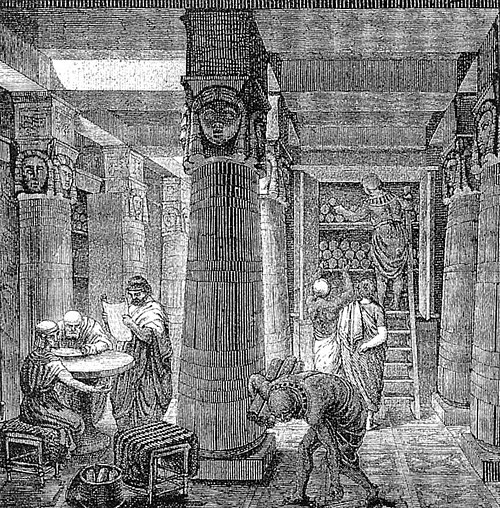
Founded in Egypt in the 3rd century BCE under the Ptolemaic dynasty, the Library of Alexandria aimed to collect the sum of the world's written knowledge, reportedly holding several hundred thousand scrolls at its height. Its decline was not the single dramatic fire of popular legend, but a slow erosion across centuries — damage during Julius Caesar's siege in 48 BCE, further losses under Emperor Aurelian in the 270s CE, and the destruction of an affiliated temple, the Serapeum, in 391 CE. Whatever survived was likely gone within a few more centuries.
Part of why the "single fire" story persists is that three separate historical episodes each got blamed at different points — Caesar's soldiers, a Christian mob at the Serapeum, and, in a much later and now largely discredited medieval legend, the 7th-century Muslim conquest of Egypt. Modern historians see it less as one villain and more as an institution that lost its funding, its royal patrons, and its relevance over four centuries, with each crisis stripping away what the last one left behind.
Founded: c. 283 BCE, under Ptolemy I or II
Estimated holdings: 40,000–400,000 scrolls (estimates vary widely)
Fate: Gradual decline over ~400 years, not a single fire
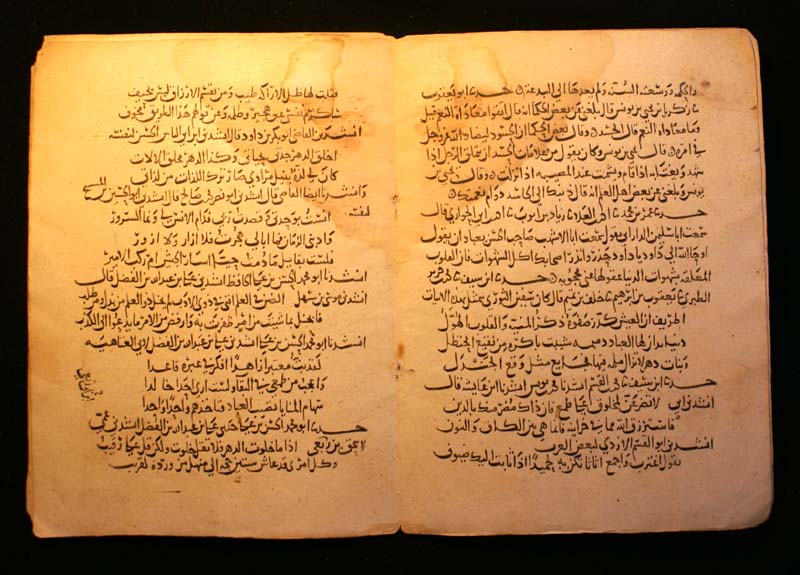
Centuries after Alexandria, the Abbasid caliphs built a new center of the world's knowledge in Baghdad: the House of Wisdom (Bayt al-Hikma), a library, translation institute, and research academy that flourished from the 8th to 13th centuries. Scholars there translated and preserved Greek, Persian, and Indian works on mathematics, astronomy, and medicine, while producing original breakthroughs — the very word "algebra" comes from the title of a book written there. In 1258, the Mongol siege of Baghdad brought this to an abrupt end. Contemporary and later accounts describe so many books thrown into the Tigris River that its waters reportedly ran black with ink — a detail historians treat with some caution, but one that captures the scale of what was lost.
Not everything vanished in the siege. Manuscripts and scholarly traditions had already been dispersing outward for centuries to other centers of learning — Cairo, Cordoba, Damascus — as the Islamic world's intellectual network grew far beyond Baghdad alone. Much of what the House of Wisdom preserved of Greek philosophy and science survived precisely because it had already been copied and carried elsewhere before 1258, later reaching medieval Europe through Arabic-to-Latin translation centers in Spain and Sicily.
Flourished: 8th–13th century CE
Notable scholars: Al-Khwarizmi, Al-Kindi, the Banu Musa brothers
Fate: Destroyed in the 1258 Mongol siege of Baghdad
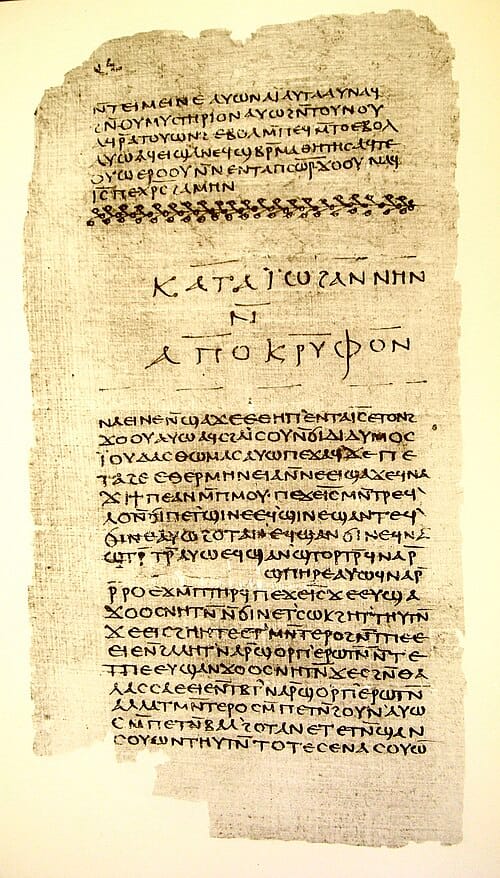
In 1945, an Egyptian farmer digging near the town of Nag Hammadi unearthed a sealed jar containing thirteen leather-bound papyrus codices, likely buried in the 4th century to protect them as church authorities moved to suppress non-orthodox Christian writings. The find included the Gospel of Thomas, a collection of sayings attributed to Jesus that differs sharply from the four canonical gospels, offering historians a rare, direct window into the diversity of early Christian thought that official church history had largely erased.
The codices very nearly didn't survive their own discovery: unaware of their value, the farmer's family reportedly burned some pages as kindling before a local priest recognized their significance. What remained passed through antiquities dealers over the following years, scattering individual codices before scholars could assemble and study the collection as a whole — a second, quieter near-loss layered on top of the original 4th-century burial.
Discovered: 1945, near Nag Hammadi, Egypt
Contents: 13 codices, over 50 Gnostic texts
Why hidden: Likely buried to survive a 4th-century crackdown on non-orthodox texts
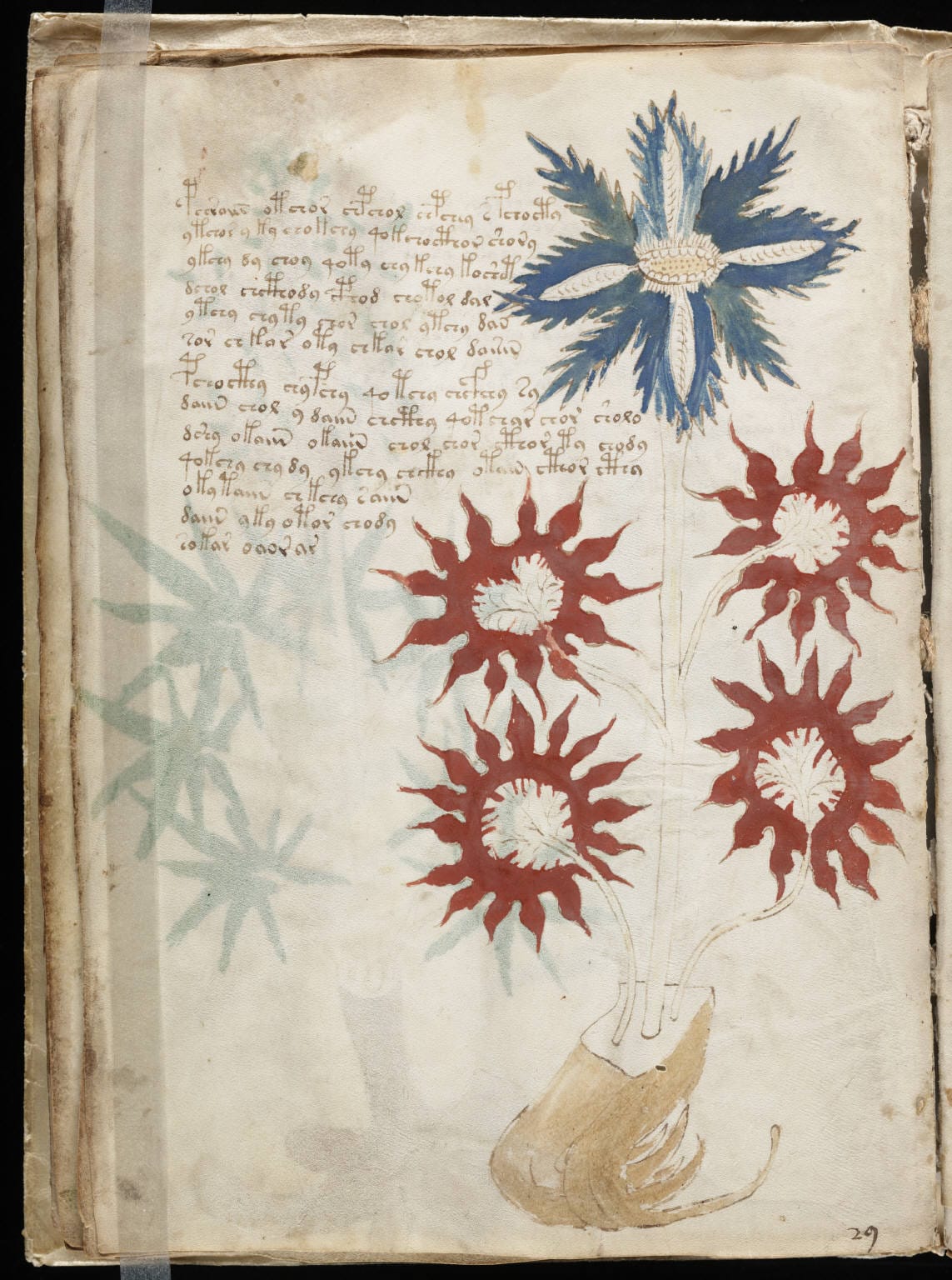
Carbon-dated to the early 15th century and rediscovered by book dealer Wilfrid Voynich in 1912, this illustrated codex is written entirely in an unknown script that has resisted every attempt at decipherment — by amateur codebreakers, professional cryptographers, and even WWII-era codebreaking teams. Its pages are filled with botanical, astronomical, and biological illustrations of plants and diagrams that match nothing in the known natural world. Whether it encodes a real language, an invented one, or an elaborate hoax remains genuinely unresolved.
Competing theories run the full range: a medical or herbal text written in a genuine cipher, an artificial or constructed language, a transcription of glossolalia ("speaking in tongues"), or an elaborate hoax perpetrated by a medieval scribe or even by Voynich himself. What keeps the mystery alive is that statistical analysis of the text shows patterns consistent with real language — word-length distributions and repetition patterns that a random hoax would be unlikely to reproduce — without matching the structure of any known language, ancient or modern.
Dated to: Early 15th century (carbon dating)
Script: Unknown, still undeciphered
Status: One of the most studied unsolved documents in the world
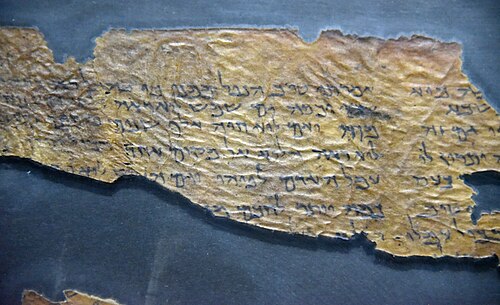
Discovered between 1946 and 1956 in caves near Qumran by the Dead Sea, this collection of roughly 981 manuscripts includes the oldest surviving copies of Hebrew Bible texts, dating from the 3rd century BCE to the 1st century CE. Unlike many entries on this list, most of the scrolls were successfully recovered, pieced together, and translated — a rare case where painstaking scholarship largely won out over the passage of time, though some fragments remain damaged, disputed, or incomplete.
Most scholars attribute the scrolls to a Jewish sect based at Qumran, often identified with the Essenes described by the historian Josephus, though the connection isn't universally accepted. For decades after their discovery, access to many of the scrolls was tightly restricted to a small international team, drawing years of criticism from outside researchers; full public access to photographs of the complete collection wasn't achieved until the 1990s, nearly half a century after the first cave was found.
Discovered: 1946–1956, caves near Qumran
Age: 3rd century BCE – 1st century CE
Significance: Oldest known copies of Hebrew Bible texts
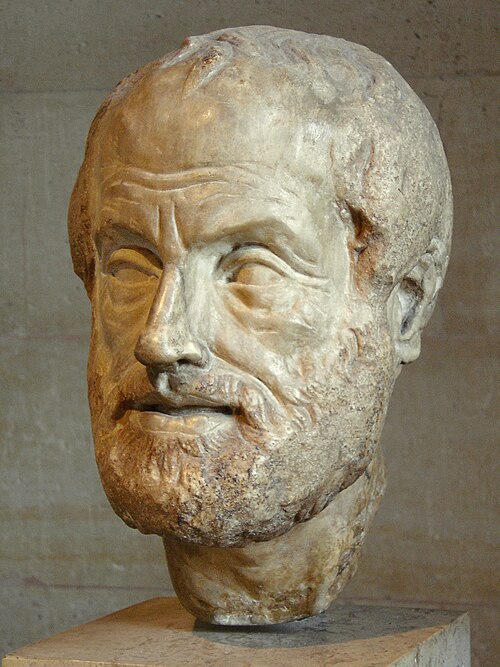
Nearly everything students read under Aristotle's name today — the Nicomachean Ethics, the Physics, the Metaphysics — was never meant for publication. These are lecture notes, dense and unpolished, used inside his own school. In antiquity, Aristotle was actually famous for his polished, publicly circulated dialogues, praised by Cicero for their eloquence and compared favorably to Plato's. Almost none of them survive; what we know of them comes only from fragments quoted by later writers. The philosopher history remembers as a dry systematizer was, to his own contemporaries, also a stylist — we simply lost the evidence.
Even the lecture notes that did survive had their own close call. According to accounts from the geographer Strabo and the biographer Plutarch, Aristotle's manuscripts passed to a student, were hidden in a cellar to keep them from a book-collecting king, and sat there for roughly two centuries — damaged by damp and neglect — before resurfacing in Rome and being edited into the organized form we now read by Andronicus of Rhodes around the 1st century BCE. What we call "Aristotle" today is filtered through that near-miss too.
What survived: Unpolished lecture notes for internal use
What was lost: Polished dialogues meant for public readership
Evidence: Fragments quoted by Cicero and other later writers
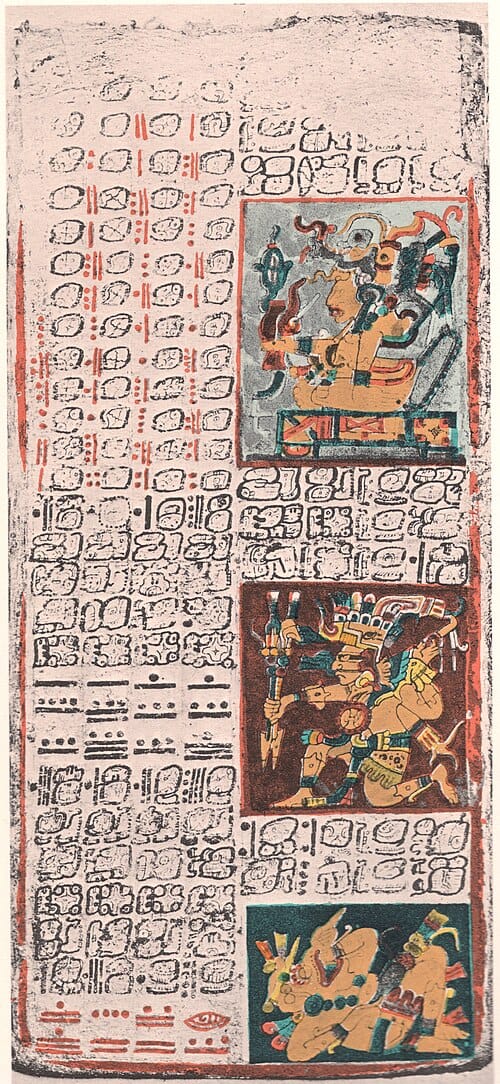
The Maya civilization produced bark-paper books (codices) recording astronomy, ritual, and history across centuries — and today only four are known to survive, out of what was likely a vast written tradition. Spanish colonial authorities systematically destroyed Maya texts as part of religious conversion efforts; the single most consequential act was Bishop Diego de Landa's 1562 order to burn Maya manuscripts at Maní, an event he himself later described in writing, seemingly without regret, as an act against "works of the devil." The surviving four codices — named for the cities where they're now held (Dresden, Madrid, Paris, and the more recently authenticated Grolier) — are essentially all that remains of an entire literary civilization.
The Grolier Codex, the most recently recognized of the four, resurfaced only in 1965 and spent decades under a cloud of suspicion as a possible forgery before a 2016 study of its pigments, paper, and iconography persuaded most Maya specialists it was genuine. Ironically, the fragments that did survive have been essential to modern efforts to decipher Maya hieroglyphic writing more broadly — a slow, ongoing process that has only really succeeded since the late 20th century.
Survivors: Only 4 confirmed codices (Dresden, Madrid, Paris, Grolier)
Key event: 1562 burning ordered by Bishop Diego de Landa
Content: Astronomy, calendrics, ritual, and divination
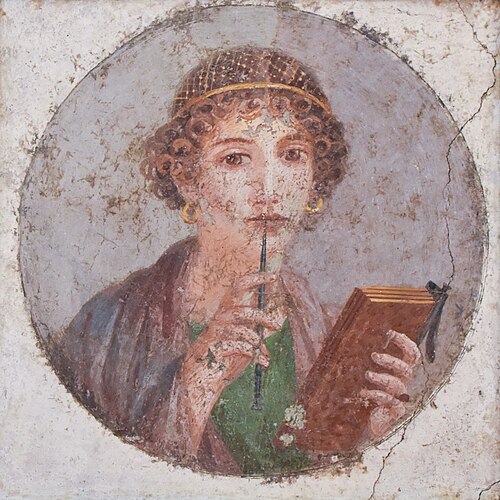
The ancient Greek poet Sappho of Lesbos (c. 630–570 BCE) was celebrated in antiquity as one of the greatest lyric poets who ever lived, reportedly composing around 10,000 lines of verse across nine books. Fewer than 700 lines survive today, mostly as fragments preserved on scraps of papyrus or quoted by later grammarians — a loss driven less by any single catastrophe than by the simple fragility of papyrus and centuries of shifting literary fashion.
Unlike most entries on this page, Sappho's story is still being added to. In 2014, two previously unknown poems — now called the "Brothers Poem" and the "Kypris Poem" — surfaced on a scrap of papyrus that had been recycled as cartonnage packing material for an Egyptian mummy wrapping centuries ago. It was the most significant addition to her surviving work in decades, a reminder that "lost" is sometimes just "not yet found."
Original output: An estimated 10,000 lines across 9 books
Survives today: Fewer than 700 lines, mostly fragments
Cause: Papyrus decay and centuries of shifting literary taste
Each of these cases is a reminder that recorded history is not a complete archive but a thin, accidental survival — shaped as much by what burned, rotted, or was banned as by what was written. New discoveries, like Nag Hammadi's, show that the record is still capable of growing even now, and that the boundary between "lost" and "forgotten" is not always permanent.
Library of Alexandria on Wikipedia · House of Wisdom on Wikipedia · Nag Hammadi library on Wikipedia