Real organizations, real founding dates, real archives — read the documented history before the legend.
Few subjects blur the line between documented history and popular myth as thoroughly as secret societies. Real fraternal and esoteric organizations have existed for centuries, with real records, real membership rolls, and real (often mundane) purposes. Separately, a much larger body of conspiracy folklore has grown up around their names, usually stretching decades or centuries past when the actual organizations stopped being historically significant, or existing at all. This page sticks to what's documented.
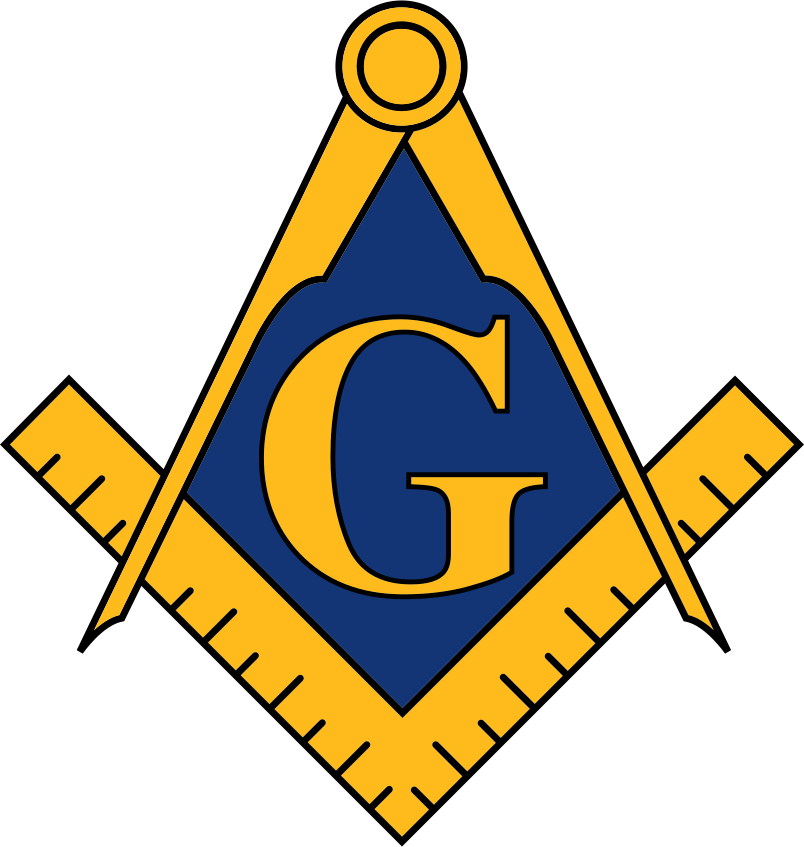
Freemasonry traces its roots to medieval stonemasons' guilds, formalizing into its modern fraternal structure with the founding of the first Grand Lodge in London in 1717. Lodges use ritual, allegory, and symbolism — most recognizably the square and compass — to teach moral and ethical lessons to members. Despite its outsized role in conspiracy fiction, Freemasonry's lodges, membership, and charitable activities are, in most countries, a matter of public record rather than secret.
Modern Freemasonry actually split early into two broad traditions that still coexist: "regular" lodges (in Britain, the US, and most English-speaking countries) that require members to profess belief in a supreme being, and "liberal" or Continental lodges — descended from France's Grand Orient de France, which dropped that requirement in 1877 — that admit atheists and focus more explicitly on civic and philosophical debate. The prominence of historical members, including many signers of the U.S. Declaration of Independence, is often cited as evidence of hidden influence, though membership rolls for those lodges are, again, on the historical record.
Founded: 1717, first Grand Lodge, London
Symbol: The square and compass
Status today: Active, largely public fraternal and charitable organization
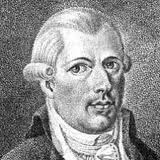
Founded in 1776 by law professor Adam Weishaupt in Bavaria, the Illuminati was an Enlightenment-era society promoting rationalism, secularism, and opposition to religious and political authority. It was banned by the Bavarian government in 1785 and, as a historical organization, effectively ceased to exist shortly after. Modern claims of an ongoing "Illuminati" secretly controlling world events are not supported by historical evidence — the documented organization lasted under a decade, over two centuries ago.
The group's real, if brief, brush with intrigue was practical rather than mystical: Illuminati members quietly infiltrated a number of Masonic lodges seeking recruits and resources, which is very likely the actual historical seed of the enduring myth that the Illuminati and Freemasonry are the same organization. The conspiracy narrative got its biggest push from a 1797 book, Proofs of a Conspiracy by Scottish physicist John Robison, which vastly overstated the group's reach and influence — and has been cited, directly or indirectly, by conspiracy theorists ever since.
Founded: 1776, by Adam Weishaupt
Banned: 1785, by the Bavarian government
Modern relevance: None documented — the historical group dissolved within a decade
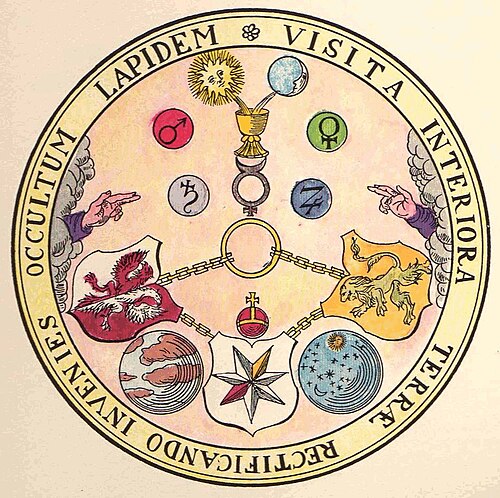
The Rosicrucian movement emerged publicly through a series of anonymous manifestos published in the early 17th century, beginning with the Fama Fraternitatis (1614), describing a legendary founder, "Christian Rosenkreuz," and a hidden brotherhood blending Christian mysticism, alchemy, and Hermetic philosophy. Historians still debate whether the manifestos described a real organization or were an allegorical (possibly even satirical) literary work — but they inspired real Rosicrucian groups that formed in the centuries afterward and continue in various forms today.
Among the modern organizations claiming descent from that original mystique, the largest is AMORC (the Ancient Mystical Order Rosae Crucis), founded in the United States in 1915 and still operating study programs and temples worldwide today. Whether any of these later groups have a genuine unbroken lineage back to 1614 is unverifiable by design — the original brotherhood, if it existed at all, left no membership rolls, only the printed manifestos themselves.
First appeared: 1614, the Fama Fraternitatis manifesto
Core themes: Christian mysticism, alchemy, Hermetic philosophy
Historians still debate: Whether the original brotherhood ever literally existed
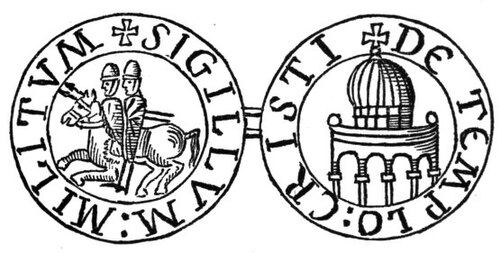
A genuine medieval Catholic military order, the Knights Templar was founded in 1119 to protect Christian pilgrims traveling to Jerusalem. Over two centuries it grew into one of the wealthiest and most powerful institutions in Europe, developing an early form of international banking. That wealth made it a target: King Philip IV of France, deeply in debt to the order, orchestrated the arrest of its members in 1307 on charges of heresy, and Pope Clement V dissolved the order in 1312. Its abrupt, dramatic downfall left a vacuum that later centuries filled with legend — unverified claims of hidden treasure, secret knowledge, and a covert survival that inspired much of the language later borrowed by fiction and conspiracy theory alike.
The "hidden treasure" story has one genuine loose thread behind it: the Templar fleet stationed at La Rochelle reportedly sailed away shortly before French authorities could seize it, and its fate was never officially recorded. That gap in the historical record is real; everything built on top of it since — secret vaults, the Holy Grail, a fugitive order regrouping in Scotland — is speculation. The one well-documented continuity is in Portugal, where the Templars' assets and many of its knights were simply reconstituted under a new name, the Order of Christ, which continued as a legitimate chivalric order for centuries afterward.
Founded: 1119, to protect pilgrims to Jerusalem
Dissolved: 1312, by Pope Clement V
Trigger: Mass arrests ordered by King Philip IV of France in 1307
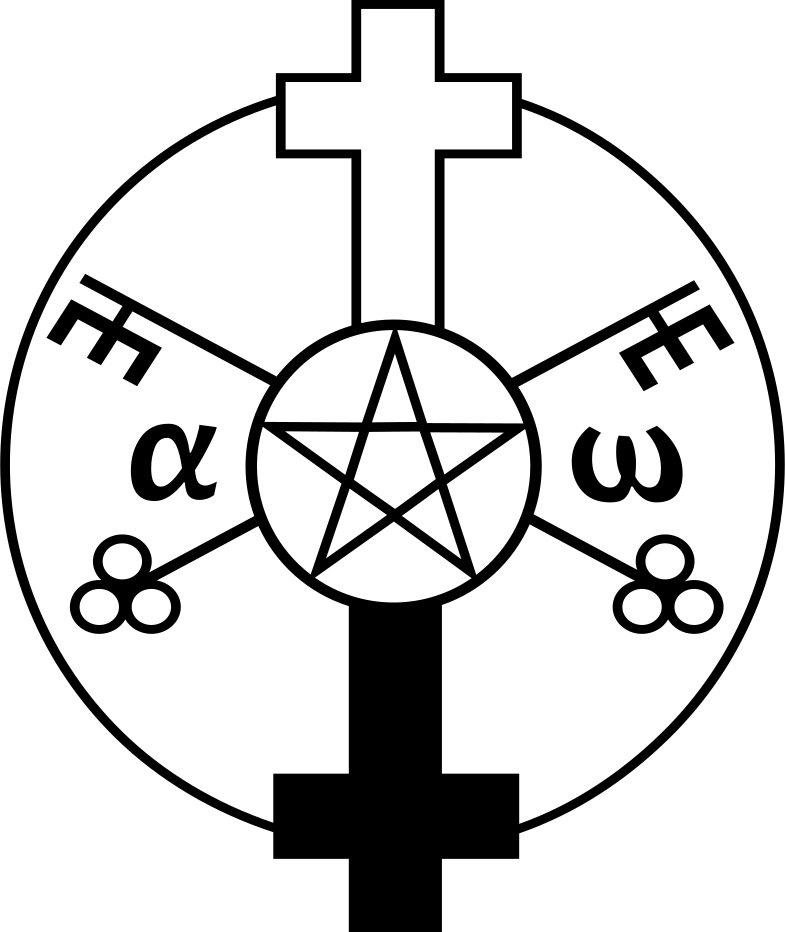
Meaning "charcoal burners" in Italian, the Carbonari were a network of secret revolutionary cells active across early 19th-century Italy and France, organized in small, compartmentalized lodges to protect members from infiltration by hostile governments. United by opposition to foreign rule and absolutist monarchy, they staged uprisings across the Italian peninsula in the 1820s and 1830s, most of which were suppressed — but their organizing model and revolutionary networks fed directly into the broader movement for Italian unification later in the century. A young Napoleon III is even believed to have been a member in his youth.
The name wasn't just decorative — members borrowed real vocabulary and ritual imagery from the actual charcoal-burning trade as cover and internal code, referring to their lodges as "sales" (huts) and using the tools of the forest trade as symbols in initiation rites. Sister movements sharing this compartmentalized, cell-based structure sprang up under different names in Spain, Portugal, and Greece, each tied to local uprisings and independence movements of the same turbulent decades.
Active: Early-to-mid 19th century, Italy and France
Goal: Constitutional government and opposition to absolutist rule
Legacy: Influenced the later movement for Italian unification (Risorgimento)
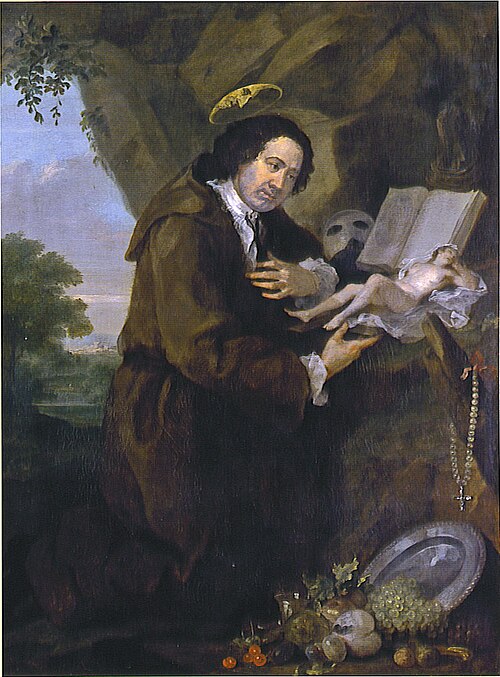
Several 18th-century British social clubs used the "Hellfire Club" name, the most famous founded around 1749 by Sir Francis Dashwood, whose members reportedly included prominent politicians and, on visits, Benjamin Franklin. Members met at Medmenham Abbey and later in caves beneath West Wycombe, gathering for food, drink, and satirical mock-rituals that parodied religious ceremony rather than practicing any genuine occultism. Contemporary rumors of orgies and devil worship were almost certainly exaggerated by political rivals — but the genuinely documented irreverence was scandalous enough for 18th-century Britain without embellishment.
Dashwood's was not even the first: the earliest known "Hellfire Club" was founded in London around 1719 and was shut down within a few years by royal proclamation from King George I, who explicitly condemned clubs of that kind for "blasphemous" behavior. The name was informal and reused rather than a single continuous organization, which is part of why later legend so easily conflated several unconnected 18th-century clubs into one grand, sinister brotherhood.
Founded: c. 1749, by Sir Francis Dashwood
Met at: Medmenham Abbey and the West Wycombe Caves
Reality check: Satirical and hedonistic, not genuinely occult
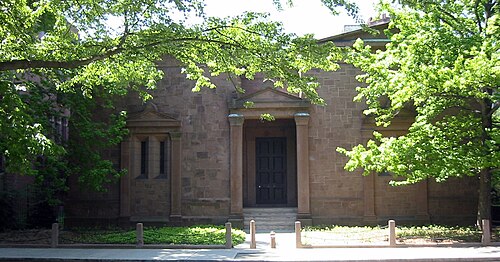
An undergraduate secret society at Yale University founded in 1832, Skull and Bones is a well-documented — if deliberately opaque — modern collegiate institution, known chiefly for the prominence of many of its alumni in American politics and business. It is a genuinely secretive organization, but a comparatively recent and narrowly collegiate one, not an ancient or global one.
Its real secrecy is exactly what makes it a useful case study in how myths grow: because Skull and Bones genuinely doesn't disclose its internal rituals, unverified stories fill the gap easily, from a supposed numerical code ("322") in its founding date to a persistent, unproven rumor that members stole and kept the skull of the Apache leader Geronimo. No credible evidence has ever substantiated either claim — but the society's real, documented secrecy is enough on its own to keep the rumors circulating indefinitely.
Founded: 1832, at Yale University
Type: Undergraduate secret society, still active
Notable for: Alumni prominent in American politics and business
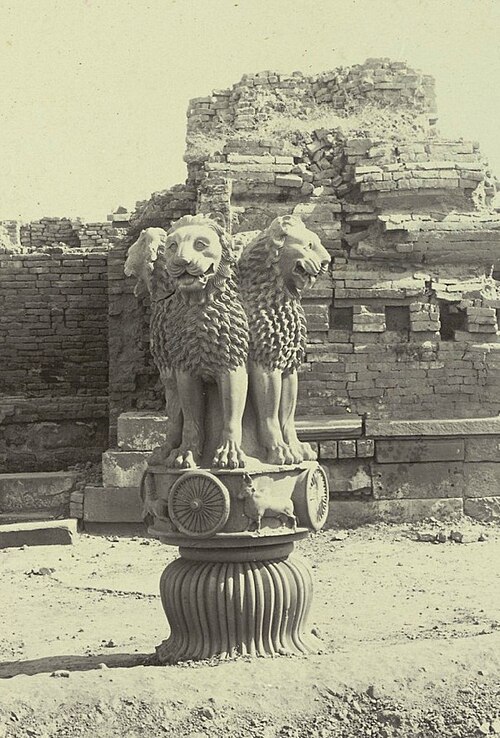
The real Ashoka is one of the best-documented rulers of the ancient world: a 3rd-century BCE Mauryan emperor whose own words survive today, carved into rock and pillar edicts across the Indian subcontinent. After his conquest of Kalinga (c. 261 BCE) — a war so bloody that, by his own account, it left him horrified by the suffering he had caused — he converted to Buddhism and spent the rest of his reign promoting nonviolence, religious tolerance, and public welfare. None of that part is legend. It's inscribed in stone.
The "Nine Unknown Men" is a different matter entirely. According to the legend, Ashoka founded a secret society of nine scholars to safeguard categories of knowledge considered too dangerous for the world — propaganda, physiology, microbiology, alchemy, communication, gravity, cosmology, light, and sociology are the fields usually listed — with each member entrusted with one volume and sworn to keep it hidden, the society renewing itself in secret for over two thousand years. It's a compelling story. It is also, as far as any historian can establish, entirely fictional.
No edict, inscription, chronicle, or archaeological find from Ashoka's era — or any era before the 20th century — mentions any such society. The idea originates from The Nine Unknown, a 1923 adventure novel by pulp writer Talbot Mundy, and was later repeated as though it were established fact in Louis Pauwels and Jacques Bergier's 1960 book The Morning of the Magicians, a work that freely mixed real history with speculative and occult claims. From there, the story spread into popular culture and conspiracy circles, usually retold without any mention of its origin in a work of fiction.
Part of why this particular legend has proven so durable is that it grafts itself onto something unimpeachably real: a documented, larger-than-life historical figure and an actual empire vast enough that "hidden knowledge somewhere within it" feels plausible. The same pattern — a genuine historical anchor dressed up with an invented secret organization — recurs constantly in this kind of folklore, which is exactly why checking a claim against primary sources, rather than how good a story it makes, is the only reliable way to tell them apart.
Claimed founder: Emperor Ashoka (a real historical figure, r. c. 268–232 BCE)
Earliest known source: Talbot Mundy's 1923 novel The Nine Unknown — a work of fiction
Historical evidence: None — no inscriptions, chronicles, or archaeology support it
What's actually real: Ashoka's Kalinga War and his conversion to Buddhism, both documented on his surviving edicts
What separates the entries above from most secret-society conspiracy theory is evidence: founding dates, membership records, government archives, and, in several cases, the organizations' own surviving documents. Treating "secretive" as equivalent to "still active and globally powerful today" is where documented history quietly gives way to myth. Approaching this subject with the same standards of evidence used elsewhere on this site — sources, dates, primary documents — is the most useful tool for telling the two apart.
Freemasonry on Wikipedia · Illuminati on Wikipedia · Rosicrucianism on Wikipedia