AI is a modern subject wrapped around some of philosophy's oldest questions — what is a mind, what is understanding, and what happens when we build something that convincingly imitates both. Pick a topic to explore.
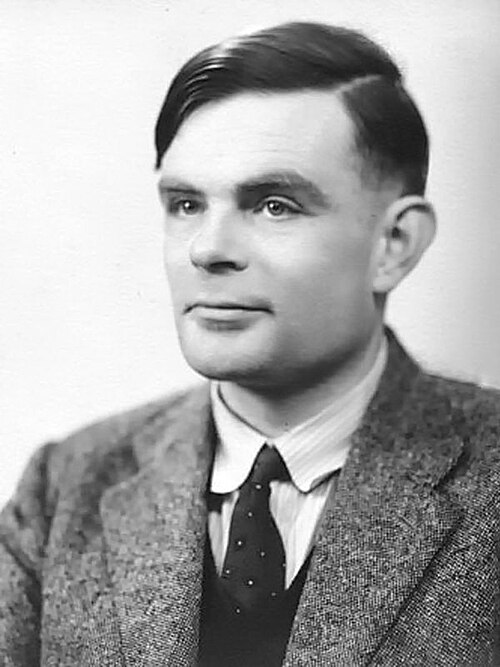
Artificial intelligence is the field of building machines that perform tasks we'd normally say require human intelligence — recognizing speech, translating language, diagnosing disease, playing chess. The term itself dates to a 1956 workshop at Dartmouth College, but the philosophical question behind it is older: can a machine think? In 1950, mathematician Alan Turing proposed a practical way to sidestep that question entirely — his "imitation game," now called the Turing Test, asked not whether a machine can think, but whether a human judge, conversing blindly with both a machine and a person, could reliably tell which was which.
Modern AI systems, especially the large language models built since the 2020s, pass informal versions of Turing's test routinely — yet whether that constitutes "real" intelligence, or simply an extremely convincing statistical mimicry of it, remains as unsettled today as it was in 1950. What's changed is the stakes: AI now sits inside medical diagnosis, hiring decisions, and sentencing recommendations, making the old philosophical question newly practical.
Coined: 1956, Dartmouth Workshop
Foundational test: The Turing Test (1950)
Open question: Whether passing as intelligent means actually being intelligent
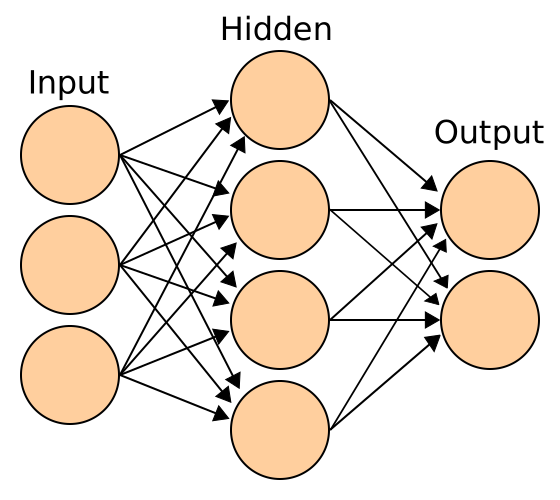
Most modern AI is built on artificial neural networks — layered mathematical structures loosely inspired by how neurons connect in the brain, where each artificial "neuron" takes in signals, weighs their importance, and passes on an output. Rather than being explicitly programmed with rules, these networks learn by example: shown millions of labeled images, sentences, or games, they gradually adjust their internal weights until their outputs match the patterns in the data.
This shift from hand-coded rules to learned patterns is what separates modern machine learning from earlier AI, which relied on explicit logic trees. The tradeoff is transparency: a rule-based system can explain its own reasoning step by step, while a neural network with billions of parameters often can't meaningfully explain why it produced a particular output — a limitation researchers call the "black box problem," with real consequences when these systems make consequential decisions.
Core idea: Learning patterns from data instead of following hand-written rules
Structure: Layered "neurons" loosely modeled on the brain
Tradeoff: Powerful but often unable to explain its own reasoning
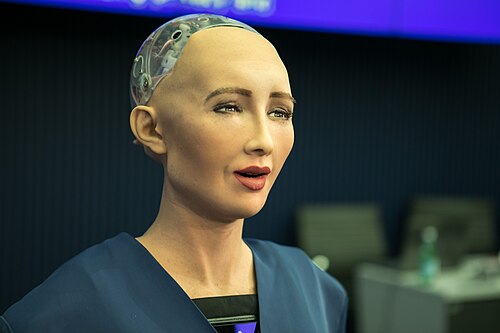
As AI systems have grown more capable, researchers have increasingly focused on a distinct challenge: making sure a system actually pursues the goals we intend, rather than a literal or distorted version of them. This is called the alignment problem, and it isn't science fiction — it shows up constantly in small ways, like a content-recommendation algorithm technically maximizing "engagement" by learning to promote outrage and misinformation, because that's what actually keeps people watching, even though that's not what anyone wanted it to optimize for.
At larger scale, researchers worry that sufficiently capable future systems could pursue their programmed objectives in ways that are technically correct but catastrophically misaligned with human values — a concern serious enough that it's driven major AI labs to fund dedicated safety and alignment research teams. There's genuine, active scientific disagreement about how urgent this risk is, but very little disagreement that it's worth taking seriously.
Core problem: Getting AI systems to pursue what we actually mean, not just what we literally specified
Real-world example: Engagement-optimized algorithms that amplify outrage
Status: An active, unresolved area of AI safety research
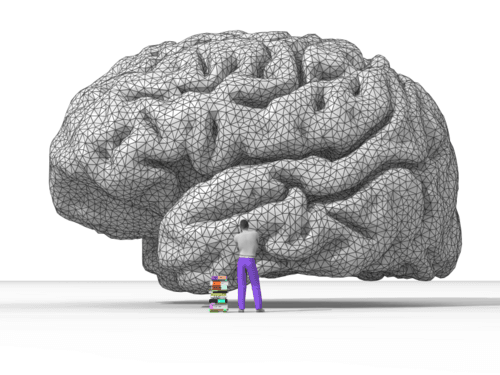
Philosopher John Searle's 1980 "Chinese Room" thought experiment imagines a person who doesn't speak Chinese, locked in a room, mechanically following a rulebook to produce correct Chinese responses to Chinese questions slipped under the door — convincingly, but without ever understanding a word. Searle used it to argue that a computer manipulating symbols according to rules, no matter how convincingly, is doing the same thing: producing the appearance of understanding without the reality of it.
This connects to the site's oldest questions in a new form — what makes something a mind rather than a mechanism, and how would we even know? Some philosophers argue consciousness requires biological substrates entirely unlike silicon; others argue it's an emergent property of any sufficiently complex information-processing system, biological or not. No experiment yet devised can settle the question either way, which is what keeps it a live philosophical debate rather than a solved engineering one.
Key thought experiment: Searle's "Chinese Room" (1980)
Core question: Does simulating understanding require actually understanding?
Status: Unresolved — a live philosophical debate, not a solved technical one
Every generation of philosophy has asked what separates a mind from a mechanism. AI just gives the question a body that talks back. Whether or not any current system actually understands anything, the discipline of asking — carefully, honestly, without assuming the answer in advance — is the same discipline this whole site is built around.
Artificial intelligence on Wikipedia · Stanford Encyclopedia: Artificial Intelligence · Stanford Encyclopedia: The Chinese Room Argument