Long before telescopes, people watched the sky more closely than most of us ever will. They needed it for calendars, harvests, navigation and omens. Along the way they made discoveries that still hold up, alongside beliefs that do not. Here is what they got right, and how.
Babylonian scribes kept “astronomical diaries”, nightly records of the Moon, planets and weather, for about six hundred years, from the 7th century BCE. From such records they learned to predict lunar eclipses using a repeating cycle of about 18 years, later called the saros. The Venus Tablet of Ammisaduqa records the planet’s risings and settings over 21 years. Much of this was gathered for astrology, but the observations were real data.
Around 240 BCE Eratosthenes heard that at noon on midsummer’s day the Sun shone straight down a well at Syene, while at Alexandria, to the north, a stick still cast a short shadow. From the angle and the distance between the cities he calculated the Earth’s circumference, and came remarkably close. A generation earlier, Aristarchus had proposed that the Earth goes round the Sun. Ptolemy’s Earth-centred system (Almagest, about 150 CE) won instead, and ruled astronomy for 1,400 years.
In 499 CE, at just 23, Aryabhata wrote the Aryabhatiya. He taught that the Earth spins on its axis, making the stars appear to move; explained eclipses by the shadows of the Earth and Moon rather than by the demon Rahu; and gave a value of pi of about 3.1416. Indian astronomy had older roots in the Vedanga Jyotisha, a manual for keeping the ritual calendar. Centuries later Jai Singh II built the giant stone instruments of the Jantar Mantar in Jaipur and Delhi; the great sundial in Jaipur reads local time to within a couple of seconds.
Chinese court astronomers recorded eclipses, comets and “guest stars” for well over two thousand years, because the heavens were thought to comment on the emperor’s rule. In 1054 they noted a new star bright enough to see by day for weeks; its remains are the Crab Nebula. The Dunhuang Star Chart, from around 700 CE, is the oldest complete star atlas known.
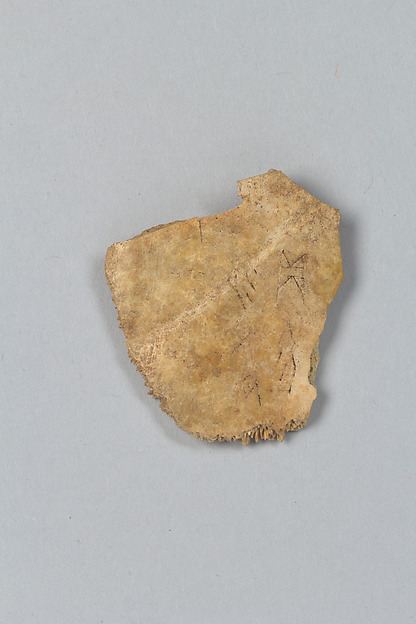 Oracle bone fragment, Shang dynasty, 13th–11th century BCE; such bones carry some of the earliest written sky observations — The Metropolitan Museum of Art, public domain
Astronomers writing in Arabic preserved and corrected Ptolemy. Abd al-Rahman al-Sufi’s Book of Fixed Stars (964) contains the earliest known description of the Andromeda galaxy, as a “little cloud”. Ulugh Beg’s observatory at Samarkand (1420s) produced a star catalogue of new precision. Many bright stars still carry Arabic names: Aldebaran, Betelgeuse, Rigel, Vega.
Maya astronomers tracked Venus so precisely that the Dresden Codex tables predict its cycle to within hours over centuries. Their Long Count calendar completed a great cycle on 21 December 2012, which they saw as a turning point, not the end of the world. Polynesian navigators crossed thousands of kilometres of open ocean by a memorised “star compass” of rising and setting stars; in 1976 the canoe Hōkūleʻa sailed from Hawaiʻi to Tahiti without instruments to prove it.
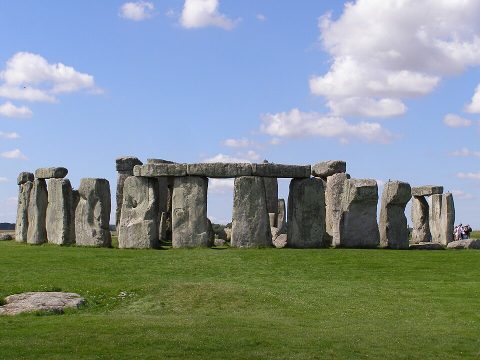
StonehengeAligned on midsummer sunrise and midwinter sunsetShang oracle boneAmong the earliest written sky observations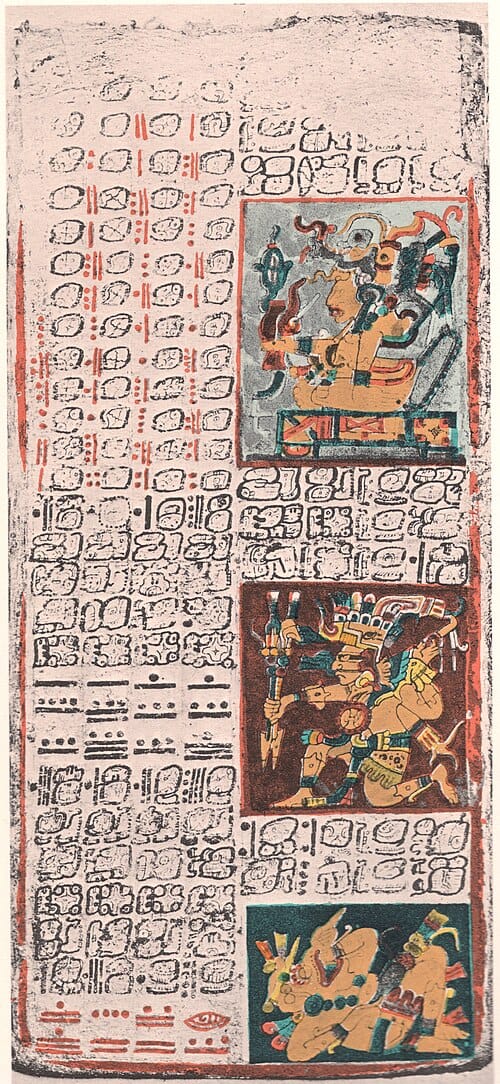 Dresden CodexMaya tables that predict the cycle of Venus
“People in the Middle Ages thought the Earth was flat.” Educated Europeans had known the Earth was a sphere since the ancient Greeks; medieval textbooks taught it. The flat-Earth story was popularised in the 19th century, partly by Washington Irving’s romanticised life of Columbus (1828).
More things people “know” that aren’t so: Quotes They Never Said
Astronomy and astrology grew up together, and for most of history the same people practised both. Observation, prediction and calendars proved true; the belief that planets steer human fate has not held up to testing. You can read about the history of that belief on our Astrology & Divination page.
Continue: What Is Time?, Rise and Fall of Ancient Empires, or Overlooked Scientists.
History of astronomy · Aryabhata · Dunhuang Star Chart (British Library) · The myth of the flat Earth
