Every one of these fooled serious people for years. Every one was caught by careful checking. Pick a case below.
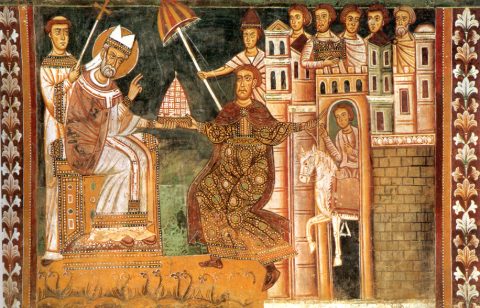
For centuries the popes cited a document in which the Roman emperor Constantine, grateful for being cured of leprosy, supposedly handed Pope Sylvester I and his successors authority over Rome and the western Empire. It was used to support papal claims to power through the Middle Ages.
In 1440 the Italian scholar Lorenzo Valla proved it a forgery using only language. Its Latin contained words and expressions that did not exist in the 4th century, and its details contradicted known history. The document is now generally dated to the 8th century. Valla’s work is often counted among the founding moments of modern textual criticism: the idea that a text can be dated by how it is written.
Claimed date: 4th century (Constantine)
Actually written: Probably 8th century
Exposed by: Lorenzo Valla, 1440, by its language
Darshniks’ Take: A forgery that shaped politics for centuries, exposed by one scholar reading carefully. Valla’s method, testing a document’s language against its claimed date, is still used today.
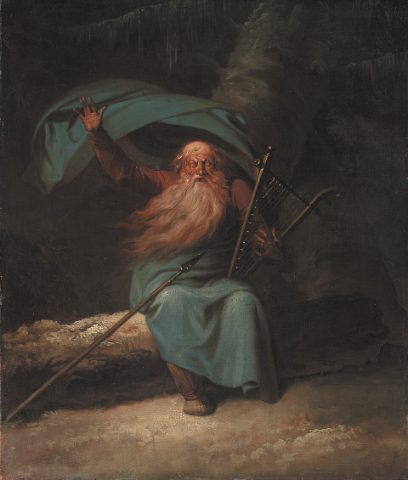
In the 1760s the Scottish poet James Macpherson published what he said were translations of ancient Gaelic epics by a 3rd-century bard named Ossian. They were a sensation across Europe: Napoleon carried them on campaign, and they helped launch the Romantic movement.
Samuel Johnson called them a fraud almost at once, and Macpherson never produced the ancient manuscripts he claimed to have. An 1805 investigation by the Highland Society concluded that he had drawn on genuine Gaelic ballads but freely rewrote, combined and invented much of the text. Ossian sits in the grey zone between forgery and creative adaptation, and its influence on literature was entirely real.
Published: 1760s, James Macpherson
Claimed source: Ancient Gaelic bard Ossian
Verdict: Real ballads, heavily rewritten and invented
Darshniks’ Take: Part real tradition, part invention, and hugely influential either way. It sits on the line between forgery and creative retelling.
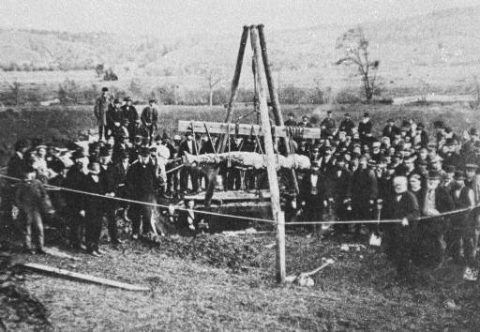
In 1869 workers digging a well on a farm near Cardiff, New York, uncovered a 3-metre stone man. Crowds paid to see the “petrified giant”, some believing it proved the Bible’s statement that there were giants in the earth.
It had been carved from gypsum the year before on the orders of George Hull, a tobacconist who wanted to mock literal belief in giants, and buried to be “found”. Hull confessed within months. The showman P. T. Barnum was refused the original, so he made his own copy and displayed it, and the copy reportedly drew bigger crowds than the fake it was faking.
“Found”: 1869, Cardiff, New York
Made of: Carved gypsum
Exposed: Its maker, George Hull, confessed within months
Darshniks’ Take: Made to mock literal belief, and believed anyway. People paid to see a fake of a fake, which says a lot about the appetite for wonders.
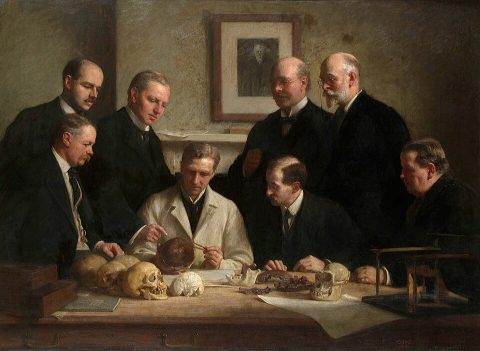
In 1912 the amateur collector Charles Dawson and Arthur Smith Woodward of the British Museum announced fossils from a gravel pit at Piltdown in Sussex: a human-like skull with an ape-like jaw. It seemed to be the “missing link” between apes and humans, and conveniently it was English.
For four decades it confused the study of human evolution, because it did not fit the real fossils being found in Africa and Asia. In 1953 Kenneth Oakley, Joseph Weiner and Wilfrid Le Gros Clark proved it a forgery: the jaw was an orangutan’s, the teeth had been filed down, and the bones were stained to look old. Dawson is the main suspect. Piltdown is the classic lesson in how a find that confirms what people want to believe gets too little scrutiny.
Announced: 1912, Piltdown, England
Exposed: 1953, by fluorine dating and close study
Actually: Human skull, orangutan jaw, filed teeth
Darshniks’ Take: It lasted forty years because it told experts what they wanted to hear. The lesson is to be most suspicious of evidence that flatters your expectations.
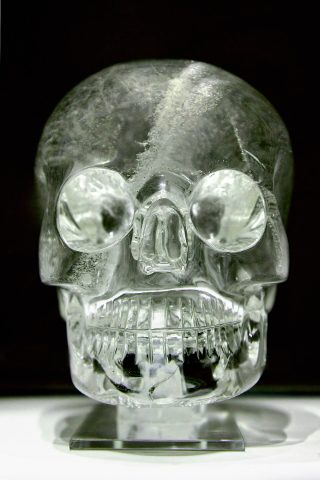
Several carved skulls of rock crystal surfaced in the 19th and early 20th centuries, sold as Aztec or Maya treasures, and later inspired legends of ancient powers and even a film. Famous examples are held by the British Museum and the Smithsonian.
Scientific study showed the British Museum and Smithsonian skulls were cut with rotary wheels and modern abrasives, tools unknown in the Americas before the Spanish conquest. Much of the trade has been traced to the 19th-century French antiquities dealer Eugène Boban. No crystal skull has ever been found in a documented archaeological excavation. Today the museums display them as examples of 19th-century fakes.
Claimed origin: Aztec or Maya
Actually made: 19th century, with rotary tools
Traced to: Dealer Eugène Boban and others
Darshniks’ Take: Made in the 19th century and sold as ancient. Museums now display them as fakes, which is an honest way to keep them.
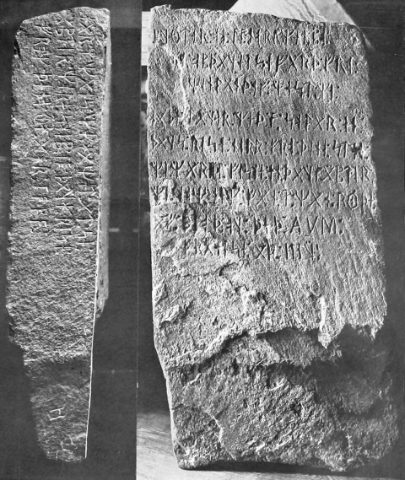
In 1898 a Swedish-American farmer, Olof Öhman, said he found a stone in Minnesota carved with runes describing a journey by Norse explorers in 1362. If genuine, it would put Scandinavians in the middle of North America more than a century before Columbus.
Runologists and linguists have concluded it is a 19th-century creation: its language and runes include forms that fit modern Swedish dialects rather than the 14th century, and there is no archaeological trace of Norse travellers in Minnesota. Real Norse presence in North America is proven elsewhere, at L’Anse aux Meadows in Newfoundland, dated to about 1000 CE, which makes the real story more remarkable than the fake.
Found: 1898, Minnesota, USA
Claims: Norse explorers in 1362
Verdict: Most experts: 19th-century hoax
Darshniks’ Take: Most experts see a 19th-century creation. The real Norse site in Newfoundland makes the true story of the Vikings in America better than the fake.
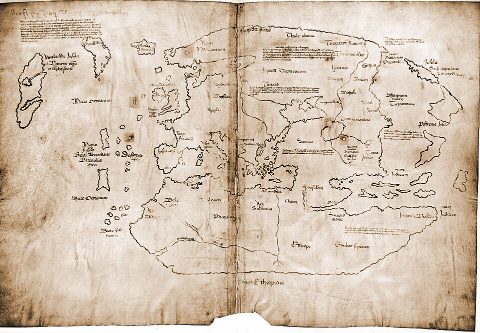
In 1965 Yale University unveiled a world map, supposedly from the 15th century, that showed “Vinland”, part of North America, as known to the Norse. It was hailed as the earliest map of the Americas, made before Columbus.
Doubts began early because its ink behaved strangely. In 2021 Yale announced that new analysis had found titanium dioxide, a pigment not made before the 1920s, throughout the lines of the map. Yale declared it a forgery. The parchment is old; the drawing on it is modern.
Unveiled: 1965, Yale University
Claimed date: Mid-15th century
Exposed: 2021: titanium dioxide in the ink
Darshniks’ Take: Old parchment, modern ink. Yale’s public admission in 2021 is a model of how institutions should correct the record.
In April 1983 the German magazine Stern announced that it had obtained 60 volumes of Adolf Hitler’s secret diaries, rescued from a plane crash in 1945, and paid millions of marks for them. Newspapers around the world bought serialisation rights, and a famous British historian initially vouched for them.
Within two weeks, forensic tests by the German Federal Archives showed the paper, glue and bindings contained materials not made until after the war. The forger, Konrad Kujau, and the Stern journalist who brought them in, Gerd Heidemann, were both jailed. It remains one of the most expensive lessons in checking a source before publishing it.
Announced: April 1983, Stern magazine
Exposed: Within two weeks, by forensic tests
Forger: Konrad Kujau
Darshniks’ Take: Experts and editors wanted a scoop more than they wanted to check. Two weeks of forensic testing could have saved everyone the embarrassment.
Almost every forgery here was exposed by the same few tools: checking language against the period it claims (Valla), testing materials and chemistry (the Vinland Map, the Hitler Diaries), comparing with what genuine finds look like (Piltdown, the crystal skulls), and asking who benefited. Hoaxes thrive when they tell people what they already want to hear.
Piltdown Man on Wikipedia · Donation of Constantine on Wikipedia · List of hoaxes on Wikipedia