Some writing systems still cannot be read. Others were cracked by patient, brilliant work. Pick a story below.
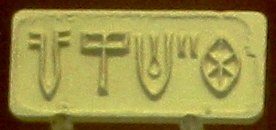
The cities of the Indus Valley civilisation, such as Harappa and Mohenjo-daro, left thousands of short inscriptions, mostly on small stamp seals, between about 2600 and 1900 BCE. There are some 400 or so distinct signs, depending on how they are counted, and most inscriptions are only around five signs long. No bilingual text, the kind of key that unlocked Egyptian, has ever been found.
Scholars disagree about what language lies behind it; proto-Dravidian, argued for by Asko Parpola and Iravatham Mahadevan, is the best-known proposal, while others favour an Indo-Aryan or a lost language. A few researchers have even argued it was not full writing at all, a claim most specialists reject. Despite many announced “decipherments”, none has convinced the field. It remains the great unread script of South Asia.
Period: c. 2600–1900 BCE (mature Harappan)
Known signs: Roughly 400 (counts vary)
Main obstacle: Short texts and no bilingual key
Darshniks’ Take: Still unread, despite many confident claims. The honest answer is that we do not know the language yet, and any “decipherment” must convince other experts before it is believed.
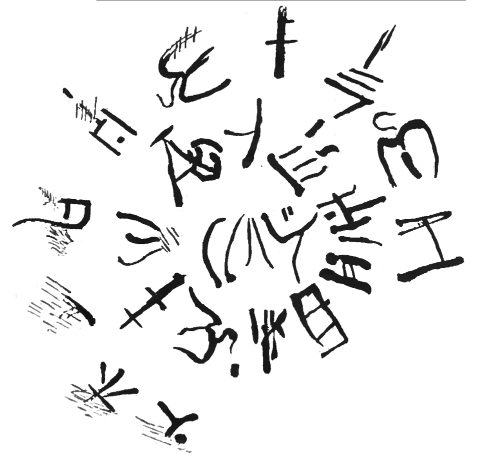
The Minoans of Crete, the Bronze Age culture of the great palace at Knossos, wrote in a script now called Linear A, used from roughly 1800 to 1450 BCE. About 1,400 inscriptions survive, mostly on clay tablets that look like accounts.
Because Linear A was the ancestor of Linear B (see below), scholars can sound out many of its signs. But the words that result do not match Greek or any other known language, so the texts can be pronounced but not understood. Some numbers and words for commodities can be recognised from context; the Minoan language itself remains unknown.
Used by: Minoan Crete
Period: c. 1800–1450 BCE
Status: Signs can be sounded; language not understood
Darshniks’ Take: We can sound out the words but not understand them, a strange and frustrating position. A bilingual find could change everything overnight.
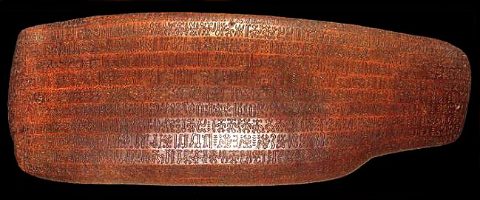
In the 19th century, visitors to Rapa Nui (Easter Island) found wooden boards carved with rows of small figures: people, birds, fish and plants. Only about two dozen objects survive, scattered in museums around the world. The text is written in “reverse boustrophedon”: you read one line, then turn the board upside down to read the next.
By the time outsiders took an interest, slave raids in the 1860s and the diseases that followed had devastated the island’s population, and no one left could read the boards. It is still debated whether rongorongo was full writing or a memory aid for chanting, and whether it was invented before Europeans arrived (the first recorded visit was in 1722) or inspired by the written treaty a Spanish expedition presented in 1770. It may be one of the very few independent inventions of writing in human history.
Where: Rapa Nui (Easter Island)
Surviving objects: About two dozen wooden tablets and objects
Status: Undeciphered; even its nature is debated
Darshniks’ Take: Whether it is full writing or a memory aid is still open. The tragedy is that the people who could read it were lost to slave raids and disease.
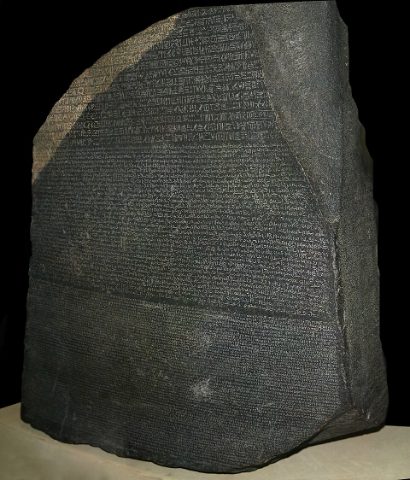
In 1799 French soldiers in Egypt found a slab carrying the same decree of 196 BCE in three scripts: hieroglyphs, demotic Egyptian and ancient Greek. Because the Greek could be read, it offered a key to the other two. The stone passed to Britain in 1801 and is now in the British Museum.
The English scholar Thomas Young made important early progress, identifying the royal names inside cartouches. But the breakthrough came from Jean-François Champollion, who in 1822 showed that hieroglyphs were not just symbols for ideas but also recorded sounds, and that his knowledge of Coptic, the late form of Egyptian, could unlock them. Within a few years, three thousand years of Egyptian writing could be read again.
Found: 1799, Rashid (Rosetta), Egypt
Decree dated: 196 BCE
Breakthrough: Champollion, 1822
Darshniks’ Take: A real key, but it still needed Champollion’s insight and his knowledge of Coptic to turn it. Evidence rarely speaks for itself; it needs a prepared mind.
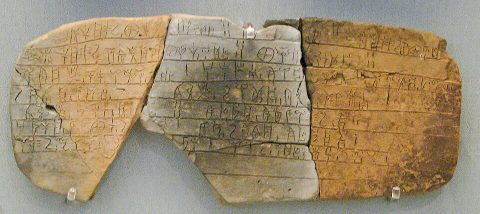
Thousands of clay tablets in a script called Linear B were found at Knossos from 1900 onward, and later on the Greek mainland at Pylos. Most scholars assumed the language was not Greek. Michael Ventris, an English architect who had been fascinated by the script since he was a schoolboy, built grids of how signs combined, drawing on the careful groundwork of the American classicist Alice Kober.
In 1952 Ventris tested whether some words were place names on Crete, and found that they spelled out an early form of Greek. With the philologist John Chadwick he published the decipherment in 1953. The tablets turned out to be mostly palace accounts: lists of sheep, chariots, oil and workers, the earliest written Greek, centuries older than Homer.
Used: c. 1450–1200 BCE, Mycenaean Greece
Deciphered: 1952, Michael Ventris
Language: An early form of Greek
Darshniks’ Take: An amateur architect cracked it by testing his assumptions and accepting a result he did not expect. That openness is the real lesson.
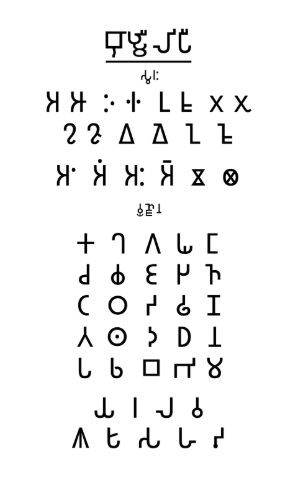
Across India stood pillars and rocks carved with an ancient script nobody could read; by the early 19th century even the meaning of Ashoka’s great inscriptions had been forgotten. The script was Brahmi, ancestor of almost every script of South and Southeast Asia, from Devanagari and Bengali to Tamil, Tibetan and Thai.
In 1837 James Prinsep, an assay master at the Calcutta mint and secretary of the Asiatic Society, cracked it, helped by short donation inscriptions at Sanchi that repeated the word “danam”, gift, and by coins bearing Greek and Brahmi together. Soon he could read the edicts of a king calling himself “Devanampiya Piyadasi”, Beloved of the Gods, later identified as Ashoka. A whole chapter of Indian history became readable at once.
Script: Brahmi, used from at least the 3rd century BCE
Deciphered: 1837, James Prinsep
Revealed: The edicts of Ashoka
Darshniks’ Take: One decipherment gave India back the voice of Ashoka. It also connects almost every script of South and Southeast Asia to a single ancestor.
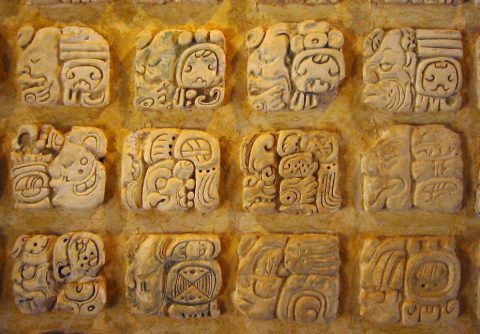
For a long time Maya writing was thought to deal only with calendars and astronomy. In 1952 the Soviet scholar Yuri Knorozov argued that it was a mixed system, with signs for whole words and signs for syllables, using a 16th-century “alphabet” recorded by Bishop Diego de Landa, who had misunderstood what his informant was telling him.
In 1960 Tatiana Proskouriakoff showed that carvings at Piedras Negras recorded the lives of real rulers: births, accessions and deaths. From the 1970s a wave of scholars built on both insights, and today most Maya inscriptions can be read. The story shows how one wrong assumption can block a decipherment for a century.
Key insight: Knorozov, 1952: syllables plus word-signs
History in stone: Proskouriakoff, 1960
Status: Largely deciphered today
Darshniks’ Take: For decades a wrong assumption, that Maya writing was only calendars, blocked progress. Once it was abandoned, the history of real Maya kings appeared.
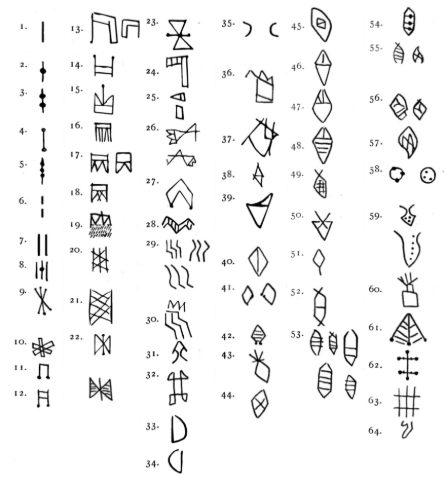
Linear Elamite was used in what is now south-western Iran around the late third millennium BCE. Only a few dozen inscriptions are known, many on silver beakers whose origins are disputed. For a century it resisted decipherment.
In 2022 a team led by the French archaeologist François Desset published a decipherment, reading the script as largely phonetic and identifying the names of kings such as Shilhaha and Puzur-Sushinak. Many specialists have accepted the core of the work, though some readings and the authenticity of certain objects are still debated. It shows that “undeciphered” is not forever.
Region: Elam, south-western Iran
Period: Late 3rd millennium BCE
Decipherment: Published 2022 (Desset and colleagues); details debated
Darshniks’ Take: A major recent breakthrough, broadly welcomed by specialists but still being tested. That is how good scholarship should work: bold claims, then careful checking.
Every successful decipherment needed some of the same ingredients: enough text, a known language related to the hidden one, and ideally a bilingual inscription or names that could be recognised. Scripts like the Indus signs and Rongorongo lack most of these, which is why they still keep their secrets, and why claims of a sudden, complete decipherment deserve caution.
Undeciphered writing systems on Wikipedia · Indus script on Wikipedia · Decipherment of Linear B (Wikipedia)
