Look up on a dark night and the question asks itself: is anyone else out there? Philosophers argued about other worlds two thousand years before telescopes. Today we know planets are everywhere, and the question has only become sharper, because so far the universe has said nothing back.
The Greek atomists reasoned that if atoms are infinite and the void is endless, the same processes that made our world must have made others.
“Moreover, there is an infinite number of worlds, some like this world, others unlike it.”Epicurus, Letter to Herodotus, in Diogenes Laertius X.45 (tr. R. D. Hicks)
Aristotle disagreed: there could be only one world, with the Earth at its centre. His view won, and held for nearly two thousand years.
India and Buddhism: countless world-systems
Indian cosmology was far more expansive. Early Buddhist texts describe a “thousandfold world system”, each world with its own sun and moon, multiplied again and again (Anguttara Nikaya 3.80). The Bhagavata Purana speaks of innumerable universes, drifting like specks of dust (10.14.11). The Quran’s opening chapter calls God “Lord of the worlds”, a phrase some Muslim thinkers later read in the plural quite literally.
Giordano Bruno: infinite suns
In On the Infinite Universe and Worlds (1584), the Italian friar Giordano Bruno argued that the stars are suns, circled by their own planets, perhaps with their own inhabitants. He was burned in Rome in 1600. His trial was mainly about theology rather than astronomy, but his infinite universe became a symbol of free thought.
What science has found
Planets everywhere
In 1995 Michel Mayor and Didier Queloz found the first planet orbiting a Sun-like star, 51 Pegasi b, work later honoured with a Nobel Prize. Since then astronomers have confirmed more than 5,000 planets around other stars. Data from the Kepler telescope suggest that a sizeable fraction of Sun-like stars have a roughly Earth-sized planet at a distance where liquid water could exist. In our galaxy alone, that could mean billions of candidates.
The Drake equation
In 1961 the astronomer Frank Drake wrote down the factors that decide how many civilisations we might hear from: how many stars form, how many have planets, how many planets suit life, how often life appears, becomes intelligent, builds radio, and how long such civilisations last. It is less a formula than an honest list of what we don’t know; the last few factors could be almost anything.
The Drake equation, as a funnelEach step narrows the count of civilisations we might hear from
How many stars form
How many have planets
How many planets suit life
How often life appears
How often it becomes intelligent
How often it builds radio
How long such civilisations last
Better knownCould be almost anything
Fermi’s question
Over lunch at Los Alamos in 1950, the physicist Enrico Fermi reportedly asked, “Where is everybody?” If the galaxy is billions of years old and life is common, someone should have spread across it by now. The silence is the Fermi paradox. Proposed answers include: life is rare; intelligence is rare; civilisations destroy themselves (the economist Robin Hanson’s “Great Filter”); the distances are simply too vast; or we have not listened long or well enough. Decades of searching for radio signals have found nothing confirmed, apart from tantalising one-off puzzles like the 1977 “Wow!” signal.
Illustration: billions of suns, and so far, silence
Two thousand years of askingFrom philosophy to radio telescopes
1584Bruno argues the stars are suns with planets
1950Fermi asks, “Where is everybody?”
1960Project Ozma: the first modern search
1961Frank Drake writes his equation
1977The one-off “Wow!” signal
199551 Pegasi b: first planet of a Sun-like star
2015Breakthrough Listen begins
2024Europa Clipper launches
Why it matters
Either answer is staggering. If we are alone, then consciousness may be the rarest thing in the universe, and how we treat it, here, matters on a cosmic scale. If we are not alone, then our religions, philosophies and sense of importance were all written by one species among many. Kant took the question seriously enough to speculate about the inhabitants of other planets in his first book on the cosmos (1755).
Try this
A night under the sky
On a clear night, away from lights if you can, find one bright star and hold your attention on it for a minute.
Remember that it is a sun, quite possibly with planets of its own.
Ask yourself: if someone there were looking back, what would I want them to know about us?
Listening. In 1960 Frank Drake pointed a radio telescope at two nearby stars in Project Ozma, the first modern search for signals. In 1977 Ohio State’s Big Ear telescope caught a strong, narrow burst, the famous “Wow!” signal; it was never heard again. Since 2015 the Breakthrough Listen project has surveyed far more stars than any search before it, so far without a confirmed signal.
Our own neighbourhood. NASA’s Perseverance rover, on Mars since 2021, is collecting rock samples from an ancient lake bed for possible return to Earth. Saturn’s small moon Enceladus sprays jets of water into space from a hidden ocean, and the Cassini spacecraft found organic molecules in them. Europa Clipper, launched in 2024, is on its way to Jupiter’s ice-covered moon Europa.
Reading alien air. The James Webb Space Telescope can now study the atmospheres of some planets around other stars. The hope is to find gases that are hard to explain without life, though every such claim so far has been disputed.
Answers to Fermi’s Question
The Great Filter. The economist Robin Hanson suggested in the 1990s that some step on the road from chemistry to star-travelling civilisation is extremely hard. The unsettling question is whether that filter lies behind us, or ahead.
Rare Earth. In their book Rare Earth (2000), Peter Ward and Donald Brownlee argued that simple life may be common but complex life very rare, because it needs a long run of lucky conditions.
Too far, too soon. Others answer that we have searched only a tiny fraction of stars and frequencies, for only a few decades. Silence so far may mean very little.
Where is the Great Filter?Some step on this road may be extremely hard. Is it behind us, or ahead?
Chemistry
Simple life
Complex lifeRare Earth bets the hard step is here
Us
Star-travelling civilisationNobody has been seen doing this
Things People Often Get Wrong
“UFO means alien.” An unidentified object is just that, unidentified. Official reviews of such reports have found most to be balloons, drones, aircraft, birds or sensor effects, and none has produced evidence of visitors.
“The Drake equation gives the answer.” It was written as an agenda for a meeting, not a calculation. Most of its factors are still unknown, so honest estimates range from “we are alone” to “millions of civilisations”.
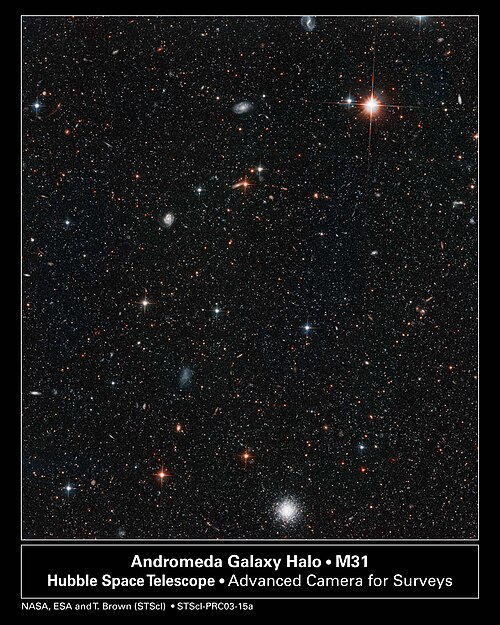
 Illustration: billions of suns, and so far, silence