Some were serious scholars, some brilliant frauds, some both. Pick a life below.
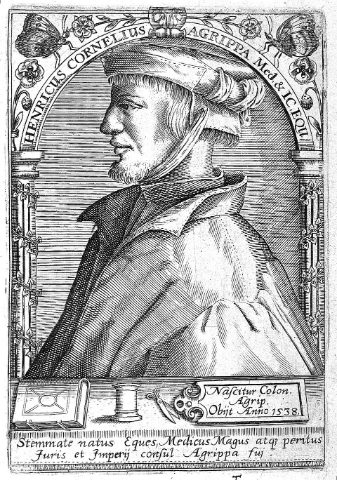
Heinrich Cornelius Agrippa (1486–1535) was a German scholar, soldier, physician and lawyer who travelled across Renaissance Europe. His Three Books of Occult Philosophy, published in full in 1533, gathered Neoplatonism, Kabbalah, astrology and natural magic into one system, and became a standard reference for Western occultism for centuries.
Agrippa also wrote a book attacking the vanity of all sciences, including magic, and he defended a woman accused of witchcraft at Metz in 1519, at some risk to himself. Legends grew after his death that a black dog who followed him was a demon. The real man was a restless intellectual who never quite fit the institutions of his time.
Lived: 1486–1535
Major work: Three Books of Occult Philosophy (1533)
Notable: Defended an accused witch at Metz, 1519
Darshniks’ Take: A serious Renaissance scholar whose books shaped Western occultism, and who also doubted all the sciences including his own. That mix of curiosity and doubt is worth admiring.
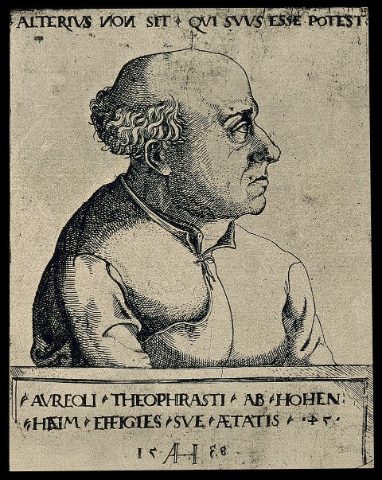
Paracelsus, born Theophrastus von Hohenheim (1493–1541), was a Swiss physician who rejected the ancient medical authorities of his day; at Basel in 1527 he reportedly burned a book of Avicenna’s medicine in public. He mixed alchemy, astrology and folk knowledge with sharp observation of patients and minerals.
He championed using chemical substances, such as mercury and antimony, as medicines, and is often called a founder of toxicology. A line from his writings is usually summed up as “the dose makes the poison”: whether a substance harms depends on how much is taken. His name, which means “beyond Celsus”, a Roman medical writer, captures his confidence. He was a mystic and a quarrelsome showman, and also a real pioneer of chemistry in medicine.
Lived: 1493–1541
Known for: Chemical medicines; “the dose makes the poison”
Field: Founder figure of toxicology
Darshniks’ Take: A mystic and a quarreller, but also a true pioneer of chemical medicine and toxicology. History rarely sorts people neatly into scientist or magician.
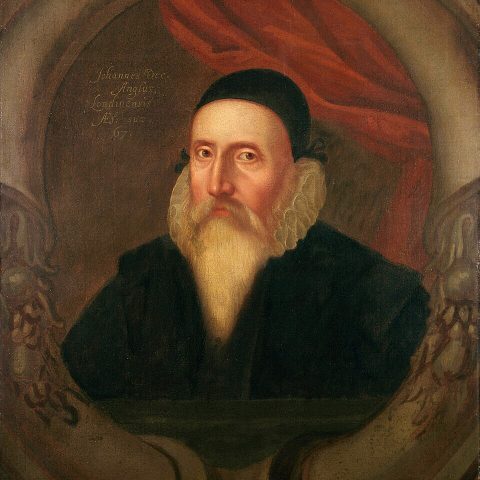
John Dee (1527–1608/9) was one of the most learned men of Elizabethan England: a mathematician, astronomer, geographer and adviser to Queen Elizabeth I, for whom he chose an astrologically favourable date for her coronation. He owned one of the largest private libraries in England and promoted the idea of a “British Empire” built on navigation.
From the 1580s Dee tried to speak with angels through a “scryer”, Edward Kelley, who claimed to see them in a crystal or a polished black mirror and to receive their language, now called Enochian. A black obsidian mirror associated with Dee, in the British Museum, was shown in 2021 to be Aztec in origin, brought from Mexico after the Spanish conquest. Dee died poor, his reputation shadowed by the angel sessions.
Lived: 1527–1608/9
Role: Scholar and adviser to Elizabeth I
Mirror: Aztec obsidian, now in the British Museum
Darshniks’ Take: A brilliant scholar who spent his last decades talking to angels through a doubtful medium. His life shows how even the learned can be led by hope.
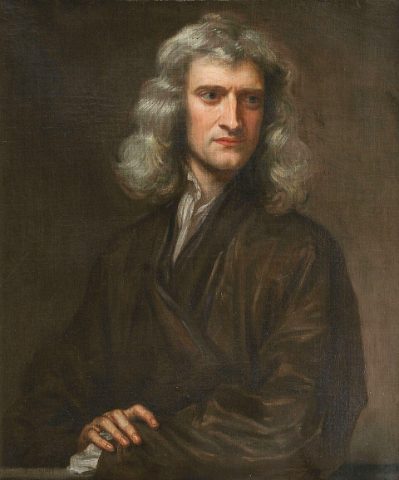
Isaac Newton (1643–1727) is famous for gravity, calculus and the laws of motion. Less well known is that he spent decades on alchemy and on interpreting biblical prophecy, writing more than a million words on these subjects that he never published.
When the economist John Maynard Keynes bought many of these papers at auction in 1936, he was astonished, and in an essay read out shortly after his death in 1946 he called Newton “not the first of the age of reason” but “the last of the magicians”. Historians now see Newton’s alchemy as a serious search for hidden forces in nature, part of the same curiosity that drove his physics. In private papers he even estimated the world would not end before 2060.
Lived: 1643–1727
Alchemy papers: Over a million words, unpublished in his life
Keynes’s phrase: “The last of the magicians”
Darshniks’ Take: The founder of modern physics was also a devoted alchemist. The boundary between science and magic was drawn later than we think.
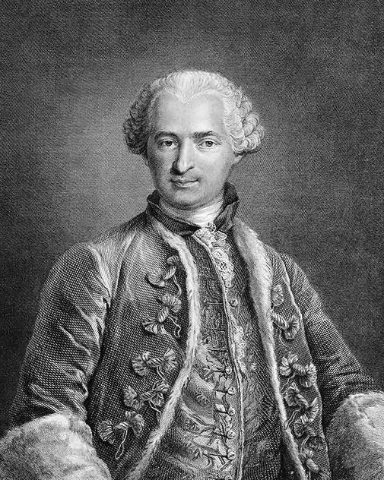
In the salons and courts of 18th-century Europe, a charming man calling himself the Comte de Saint-Germain dazzled society with his music, chemistry, knowledge of dyes and gems, and fluent languages. Nobody knew his true origins, and he did nothing to discourage rumours that he had lived for centuries and knew the secret of eternal life.
He seems to have worked for Louis XV on diplomatic errands, and he died in 1784 at Eckernförde in northern Germany, where his death is recorded in the church register. Afterwards, people claimed to meet him for decades, and Theosophists later made him an immortal “Ascended Master”. The real man was a gifted adventurer; the immortal is a legend.
Active: Mid-18th century, European courts
Died: 1784, Eckernförde (recorded)
Legend: An immortal who never died
Darshniks’ Take: The man was real, a gifted adventurer whose death was recorded in 1784. The immortal Saint-Germain is a legend later adopted by occult movements.
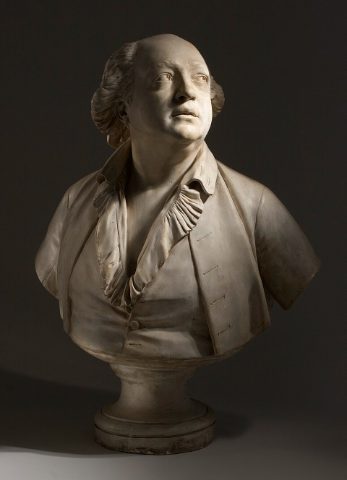
“Count Alessandro di Cagliostro” was the name taken by Giuseppe Balsamo (1743–1795), born poor in Palermo. Across Europe he sold healing potions, elixirs of youth and occult ceremonies, and founded an “Egyptian Rite” of Freemasonry that admitted women.
In 1785 he was caught up in the Affair of the Diamond Necklace, a swindle that embarrassed Queen Marie Antoinette. He was acquitted, but expelled from France. In 1789 he was arrested in Rome by the Inquisition for heresy and Freemasonry, and he died in prison in the fortress of San Leo in 1795. To some he was a healer and seer, to others a con artist; Goethe, who investigated his family in Palermo, was firmly in the second camp.
Real name: Giuseppe Balsamo (1743–1795)
Scandal: Affair of the Diamond Necklace, 1785
End: Died a prisoner of the Inquisition, 1795
Darshniks’ Take: His cures and elixirs were showmanship sold to the hopeful. A charming reminder to ask for evidence, however impressive the performer.
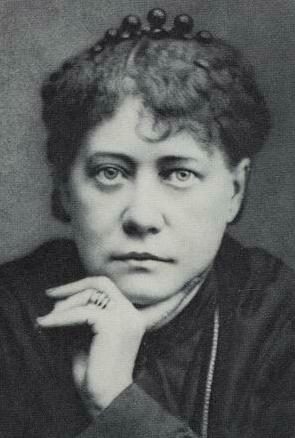
Helena Petrovna Blavatsky (1831–1891), born in what is now Ukraine, co-founded the Theosophical Society in New York in 1875 with Henry Steel Olcott. In 1882 they moved its headquarters to Adyar, in Madras (now Chennai). Her books Isis Unveiled and The Secret Doctrine claimed to reveal an ancient wisdom behind all religions, taught to her by hidden “Masters” in Tibet.
In 1885 a report for the Society for Psychical Research accused her of faking letters from the Masters and other phenomena; Theosophists contested it, and a later reassessment criticised the report’s methods. Whatever one makes of her claims, her influence was large: Theosophy helped spread interest in Hinduism and Buddhism in the West and supported Indian cultural revival, and figures from Annie Besant to the young Gandhi encountered it.
Lived: 1831–1891
Founded: Theosophical Society, 1875
Headquarters: Adyar, Chennai, from 1882
Darshniks’ Take: Her claims of hidden Masters were never demonstrated, and some phenomena were accused of fraud. Yet her influence on interest in Indian thought was real and lasting.
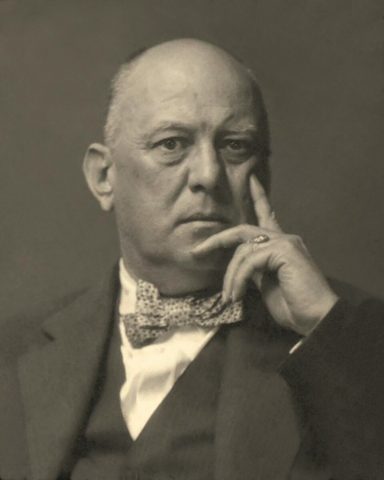
Aleister Crowley (1875–1947) was an English writer, mountaineer and occultist who joined the Hermetic Order of the Golden Dawn and later founded his own religious philosophy, Thelema. He said that in Cairo in 1904 a spirit called Aiwass dictated to him The Book of the Law, whose central line is “Do what thou wilt shall be the whole of the Law”, which he meant as following one’s true will, not mere impulse.
The British press called him “the wickedest man in the world”, and he enjoyed shocking people; his commune in Sicily was expelled by Mussolini’s government in 1923. He also took part in serious mountaineering, including an early attempt on Kangchenjunga in 1905. He died poor in Hastings, but his influence on modern occultism and on rock musicians and artists has been enormous.
Lived: 1875–1947
Founded: Thelema; The Book of the Law (1904)
Nickname: “The wickedest man in the world”
Darshniks’ Take: His life and writings are real; his reputation mixes deliberate provocation with genuine influence on modern culture. Judge him by what he actually wrote and did.
Before modern science separated chemistry from alchemy and astronomy from astrology, the same curious minds pursued both. Some of the people here, like Paracelsus and Newton, helped build modern knowledge; others, like Cagliostro, mainly built careers on people’s hopes. Telling them apart takes the same tool every time: look at what they actually did, not what was said about them.
John Dee on Wikipedia · Paracelsus on Wikipedia · Western esotericism on Wikipedia
