What did the famous prophets actually say, and what happened next? Pick one below.
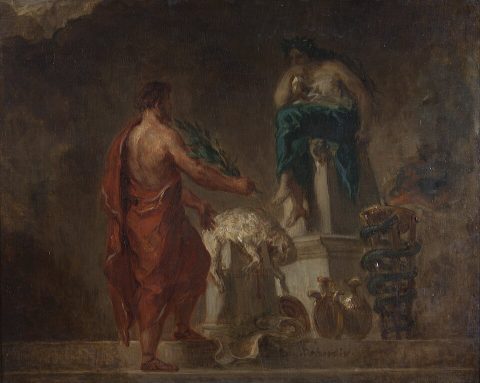
For more than a thousand years, Greeks and foreigners travelled to Apollo’s temple at Delphi to consult the Pythia, a priestess who answered questions in the god’s name. The temple bore the famous maxims “Know thyself” and “Nothing in excess”.
The oracle was famous for answers that could be read two ways. Herodotus tells how King Croesus of Lydia was told that if he attacked Persia, he would destroy a great empire. He attacked, and destroyed his own. Ancient writers said the Pythia breathed vapours from a chasm; a 2001 geological study suggested that faults beneath the site could have released ethylene or other gases, though this remains debated. The oracle fell silent under Christian emperors in the late 4th century.
Active: From at least the 8th century BCE to the late 4th century CE
Famous answer: Croesus will “destroy a great empire” (Herodotus 1.53)
Inscribed: “Know thyself”
Darshniks’ Take: The oracle was real and influential, and its answers were famously double-edged. Its most lasting message was written on the temple: know thyself.
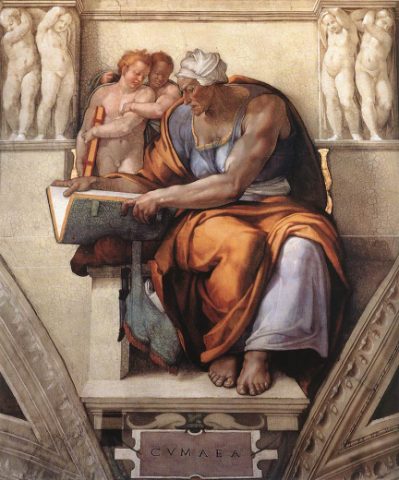
Roman legend told that a mysterious woman, a Sibyl, offered King Tarquin nine books of prophecy for a huge price. When he refused, she burned three and offered the six for the same price; refused again, she burned three more, and he finally bought the last three at the original price.
Whatever their origin, the Sibylline Books were real: kept in the Temple of Jupiter on the Capitol, consulted by special priests in times of crisis, usually to learn which rituals would appease the gods rather than to foretell events. They were destroyed when the temple burned in 83 BCE, replaced by a new collection, and that was reportedly burned by the general Stilicho in the early 5th century CE. Later “Sibylline Oracles” in circulation are different texts, largely Jewish and Christian compositions.
Kept: Temple of Jupiter, Rome
Used for: Finding rituals in times of crisis
Fate: Burned 83 BCE; the replacement burned c. 405 CE
Darshniks’ Take: Real books, used mostly to choose rituals in a crisis rather than to predict events. They show how ancient states used religion to calm public fear.
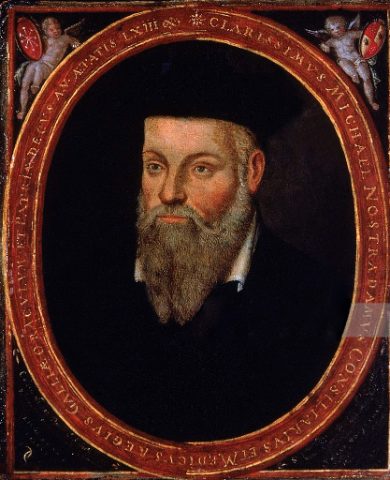
Michel de Nostredame (1503–1566) was a French physician and astrologer whose book Les Prophéties, first published in 1555, contains hundreds of four-line verses, or quatrains, written in a deliberately obscure mix of French, Latin and wordplay, with almost no dates.
After almost every major event, people find a quatrain that seems to have predicted it. But the matches are made after the fact, and depend on loose translation. A famous example: a verse mentioning “Hister” is often said to name Hitler, but Hister was the Latin name for the lower Danube river. Viral “Nostradamus predictions” are often invented outright. No one has used his verses to predict a specific event before it happened.
Lived: 1503–1566, France
Book: Les Prophéties (1555)
Track record: Matches found only after the event
Darshniks’ Take: His verses are real, but their “hits” are found only after the event. No one has ever used them to predict anything specific in advance.
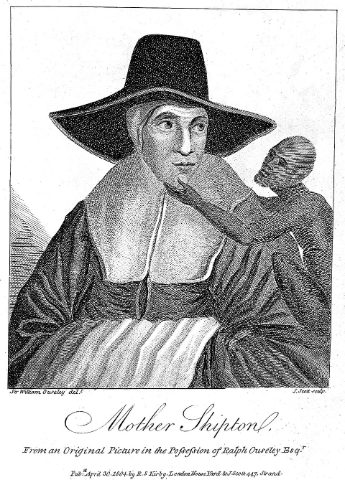
English folklore tells of Ursula Southeil, “Mother Shipton”, a Yorkshire seer of the early 16th century said to have foretold the fall of Cardinal Wolsey and much else. A cave in Knaresborough is still visited as her birthplace.
The first printed prophecies appeared in 1641, a century after she supposedly lived, and the most famous verses, which seem to predict railways, telegraphs and the end of the world in 1881, were published in 1862 by Charles Hindley. In 1873 Hindley admitted that he had written them himself. Whether Mother Shipton ever existed at all is uncertain.
Supposedly lived: Early 16th century, Yorkshire
First prophecies printed: 1641
Famous verses: Forged by Charles Hindley (admitted 1873)
Darshniks’ Take: Her most famous prophecies were written in 1862 by a man who later admitted it. Whether she existed at all is uncertain.
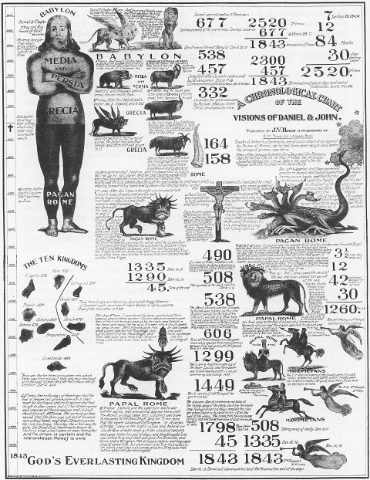
In the 1830s the American preacher William Miller calculated from the Book of Daniel that Christ would return around 1843 or 1844. Tens of thousands of followers, called Millerites, eventually settled on 22 October 1844. Some gave away their property and waited through the night.
Nothing happened, and the day became known as the Great Disappointment. The movement split, and one branch later grew into the Seventh-day Adventist Church, which reinterpreted the date. The episode is a classic case in the psychology of failed prophecy: some believers abandon the belief, while others reinterpret it and believe more strongly.
Predicted date: 22 October 1844
Movement: Millerites (William Miller)
Aftermath: Split; one branch became the Seventh-day Adventists
Darshniks’ Take: A real, dated prediction that failed, and a classic study in how believers respond when prophecy fails. Some walked away; others reinterpreted and believed more strongly.
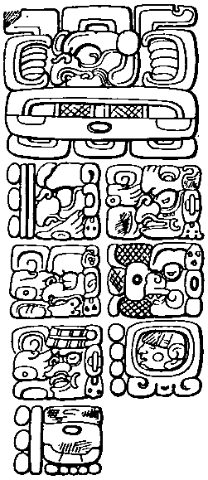
The Maya Long Count calendar counts days in cycles. On 21 December 2012, one great cycle of 13 b’ak’tuns, about 5,125 years, came to an end. In the decades before, books, films and websites claimed the Maya had predicted the end of the world, a cosmic alignment or a hidden planet collision on that date.
Maya inscriptions say nothing of the kind. A monument at Tortuguero mentions the date in connection with a god, and other inscriptions refer to dates thousands of years beyond 2012, so the calendar clearly kept going. For the Maya, the end of a cycle was like a milometer rolling over. NASA even published explanations before the date. The world did not end.
Date: 21 December 2012
What it was: The end of a Long Count cycle
What the Maya said: Nothing about the end of the world
Darshniks’ Take: The Maya calendar never predicted the end of the world; it simply rolled over a cycle. A modern myth borrowed an ancient calendar.
In 1994 three Israeli researchers published a paper claiming that the Hebrew text of Genesis hid the names and dates of famous rabbis, found by reading letters at equal intervals. In 1997 the journalist Michael Drosnin’s bestseller The Bible Code claimed such hidden messages predicted assassinations and future catastrophes.
Mathematicians showed that any long enough text contains such “codes” by chance. The Australian mathematician Brendan McKay found “predictions” of assassinations hidden the same way in the English text of Moby-Dick, answering Drosnin’s challenge to do so. A 1999 paper by McKay and colleagues also argued that the original rabbis result depended on choices in the data. Hidden codes found after the fact are a lesson in how pattern-hungry minds can fool themselves.
Paper: 1994, Witztum, Rips and Rosenberg
Bestseller: The Bible Code (1997)
Rebuttal: Same “codes” found in Moby-Dick
Darshniks’ Take: Not a deliberate forgery, but a statistical illusion: the same “codes” appear in Moby-Dick. A lesson in how pattern-seeking minds fool themselves.
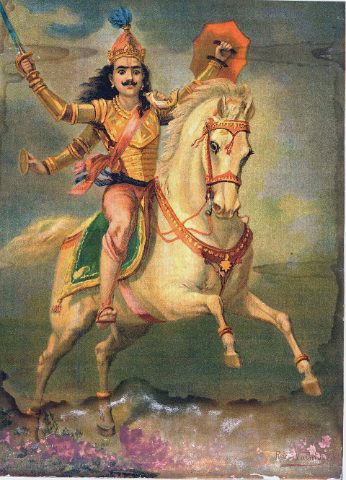
Hindu texts such as the Mahabharata and the Puranas describe four ages, or yugas, declining from a golden age of truth to the Kali Yuga, an age of conflict in which virtue weakens. Traditional reckoning dates the start of the Kali Yuga to 3102 BCE, and gives it a length of 432,000 years. At its end, the Puranas say, Kalki, the tenth avatar of Vishnu, will appear and restore righteousness.
These texts include passages describing the troubles of the Kali Yuga: greed, rulers who exploit their people, the decline of learning. Readers in every century have recognised their own times in them, which is part of their power. They are best read as moral and cosmological teaching rather than a timetable. Viral claims of precise dates for Kalki’s arrival do not come from the scriptures.
Start (traditional): 3102 BCE
Length (traditional): 432,000 years
Ends with: Kalki, tenth avatar of Vishnu
Darshniks’ Take: A genuine teaching of Hindu cosmology, best read as moral reflection rather than a timetable. Viral claims of exact dates for Kalki do not come from the scriptures.
Most successful-seeming prophecies share a few features: they are vague, they have no dates, and the match is found only after the event. Our minds are pattern-seeking, and we remember hits and forget misses. Prophecies that name a date are the only ones that can be tested, and so far every end-of-the-world date has passed.
Pythia (Oracle of Delphi) on Wikipedia · Nostradamus on Wikipedia · 2012 phenomenon on Wikipedia